Starch left in the pulp is starch you already paid for
Every cassava starch line loses product in the same places: starch still bound in rasped pulp, slurry that thickens and drags on the screens, hydrocyclones that drift when root quality changes, and wet pulp that costs money to press, dry or haul. Enzymesconnect supplies enzyme programs aimed at those loss points, for factories that want more saleable starch from the same root intake.
We work with cassava and tapioca starch producers, starch-derivative and ethanol plants that run cassava, and the distributors and agents who supply them. Supply is wholesale and bulk, quoted per order.
To get a useful quote, send three things: the problem you want to fix (pulp loss, viscosity, separation, dewatering), your approximate root or starch throughput, and the delivery country. Pack format, quantity and terms are quoted per order.
Where an enzyme program pays back in a cassava starch line
| Loss point | What the plant sees | Enzyme category usually evaluated |
|---|---|---|
| Rasping and pulp release | Visible starch in discharged pulp, rasper pushed harder to compensate | Cellulase and pectinase |
| Slurry viscosity | Pumps working harder, screens blinding, unstable feed to separation | Pectinase; amylase only in streams where starch breakdown is wanted |
| Separation and washing | Hydrocyclone drift, fines in process water, brightness variation | Cell-wall enzymes upstream of separation |
| Pulp dewatering | Wet press cake, high drying or hauling cost, odour risk | Fibre-opening enzymes ahead of the press |
| Side streams to sugar or ethanol | Thick residue streams that need liquefying | Heat-stable alpha-amylase |
Rasping and pulp release
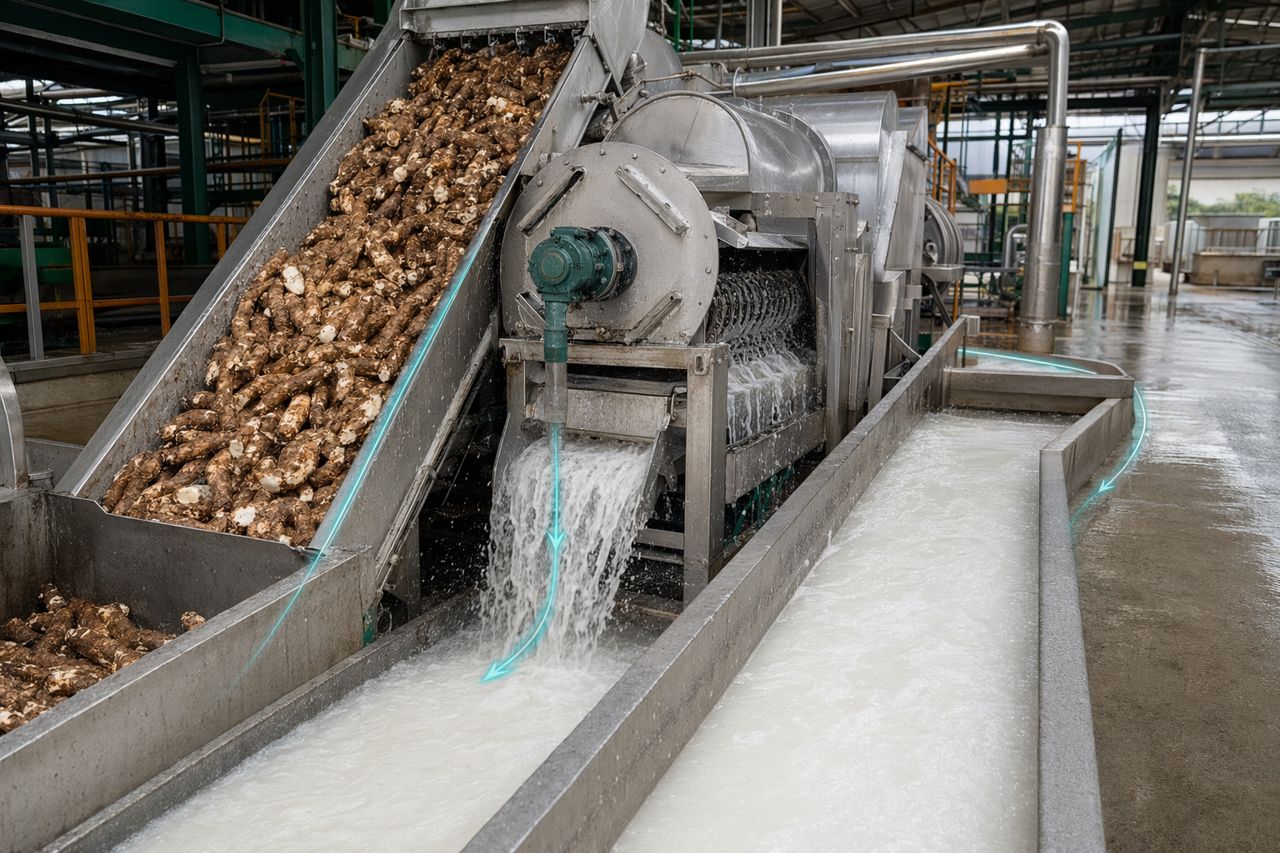
The rasping stage sets the ceiling for recovery. A cell-wall enzyme program helps open plant tissue so more starch leaves the pulp before the final screen. The goal is to recover more of the starch already inside the gate, not to add a complicated new step.
Slurry viscosity control
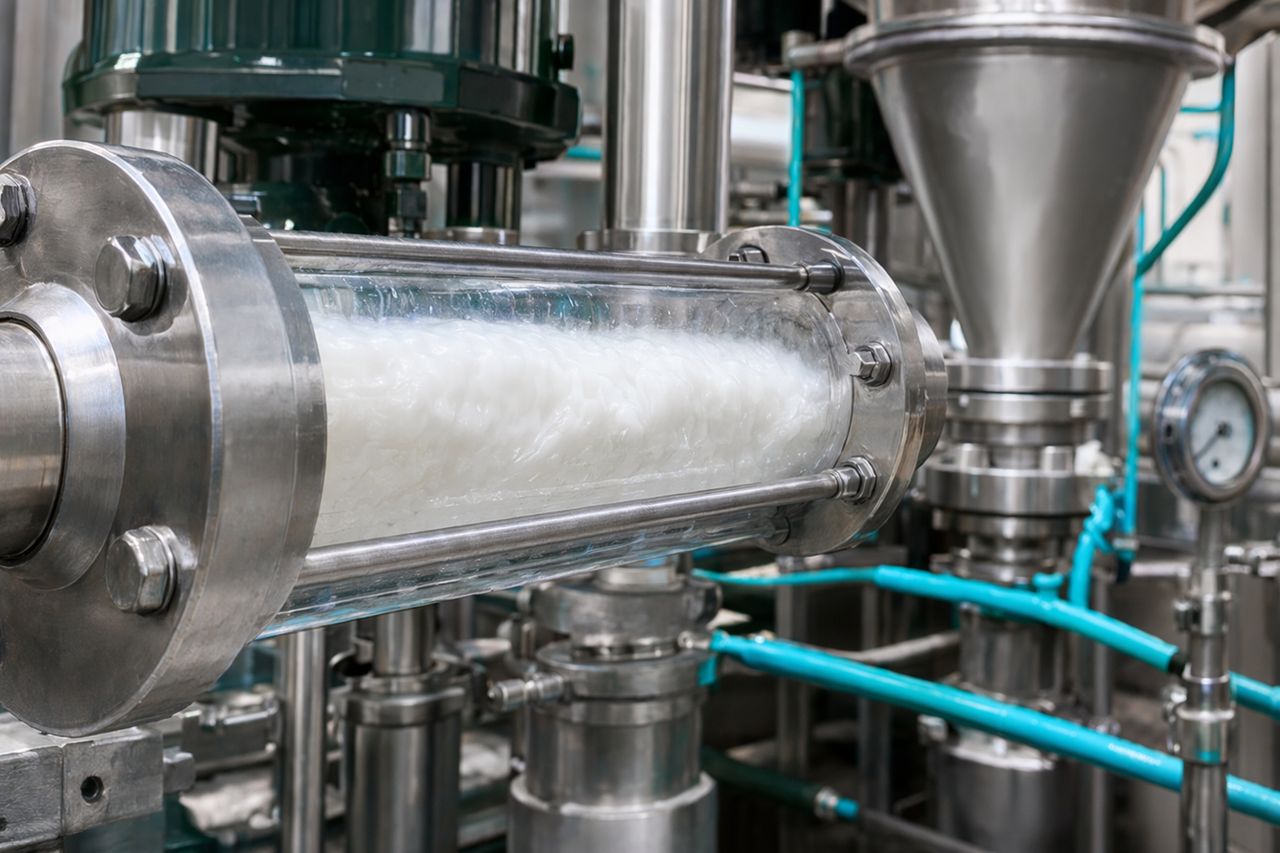
Cassava slurry changes with root age, harvest conditions and processing delay. When it thickens, pumps work harder, screens blind sooner and hydrocyclone performance drifts. We focus on where to dose, when to dose, what to watch and how to avoid over-treatment.
Separation and washing
Hydrocyclones, screens and separators perform best on consistent feed. Reducing fibre and pectin interference upstream means steadier separation, less carryover and more predictable starch brightness.
Pulp dewatering and water load
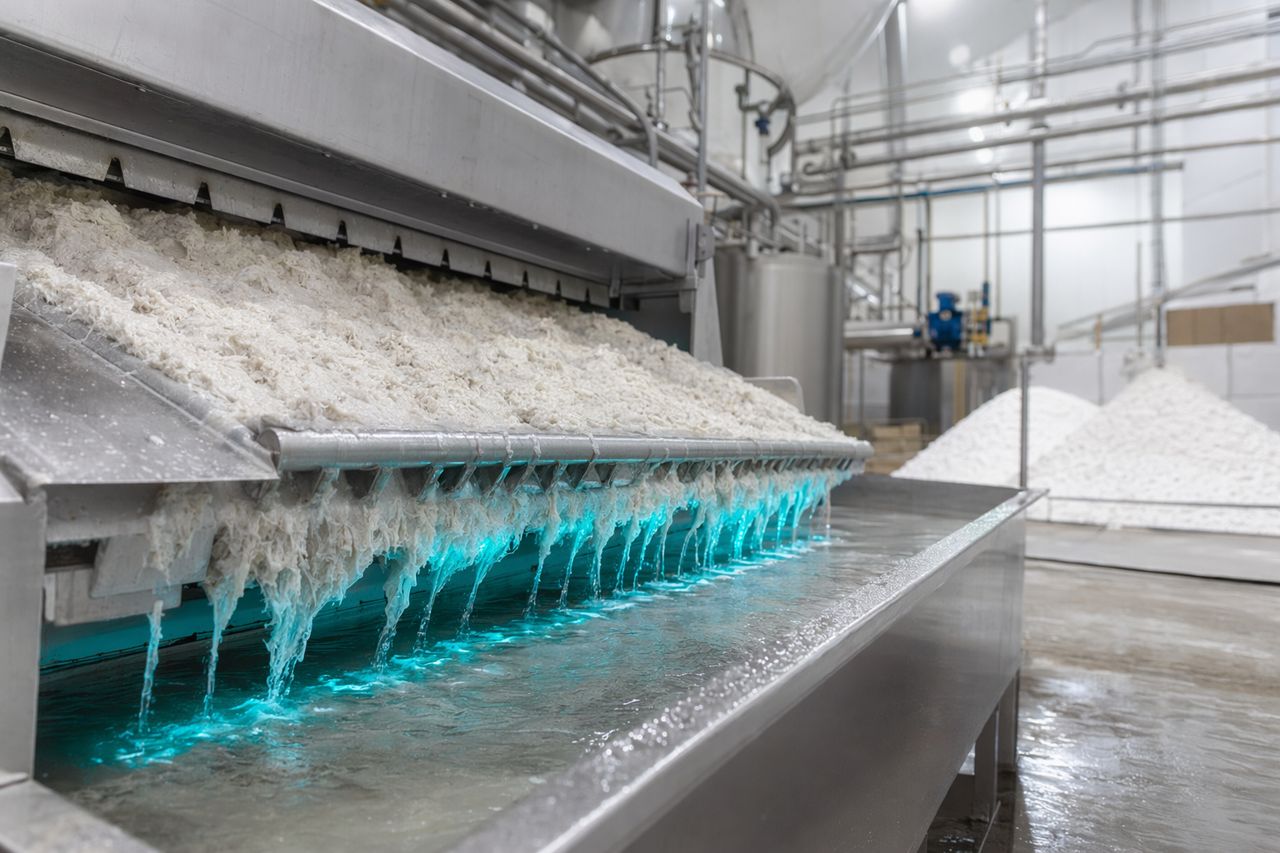
Pulp that holds too much water raises handling, drying and hauling cost and adds to the wastewater burden. Matched to the line, an enzyme step ahead of the press can help the pulp release water more evenly.
Enzyme categories we supply and help you evaluate
Cellulase for fibre opening
Used to loosen cassava cell-wall structure and release starch from fibrous material. Fit depends on root condition, rasping performance, contact time and how much process change the plant can accept.
Pectinase for slurry behaviour and release
Pectin-rich material can make slurry difficult and release inconsistent. Pectinase reduces that interference when added at the right point: smoother flow, better pulp opening, less separation stress.
Amylase, only where starch breakdown is the goal
In a native starch plant the product is starch, so amylase in the main line costs yield. It belongs in side streams, residue going to sugar or ethanol, or cleaning duties. We help you decide whether it belongs in your process at all.
Who we supply
- Cassava and tapioca starch factories buying for production or for a plant trial
- Starch-derivative, sweetener and ethanol plants that run cassava or cassava residue
- Distributors, agents and resellers supplying starch mills in their region
- Process-aid formulators who blend enzymes for starch customers
For each of them the job is the same: a clear application fit, a controlled trial path, documentation for purchasing and technical review, and repeatable supply once the program works.
How a quote and trial work
- You name the loss point. Starch in pulp, unstable viscosity, separation drift, wet pulp or wastewater load.
- We match the enzyme to the process window. Contact time, temperature, pH, mixing and the control point you actually have.
- We agree what to measure. Pulp starch loss, slurry handling, screen condition, separator stability, cake moisture, finished starch quality.
- We protect the product specification. Brightness, purity, viscosity profile and odour stay on target.
- You get a quote for trial and production quantities. Pack format, quantity and terms are quoted per order, for your destination.
Common problems we help troubleshoot
"Our pulp still carries too much starch."
We look at rasping condition, pulp opening, enzyme contact opportunity, dilution and screening, and aim to improve release without forcing an unrealistic process change.
"Slurry gets heavy and separation becomes unstable."
We review root condition, residence time, pectin-related viscosity and fibre load, and where treatment could stabilise flow before the separation equipment.
"We want better recovery, but we cannot risk product damage."
We keep extraction-support enzymes apart from starch-conversion enzymes and set clear boundaries, especially for amylase.
"Procurement needs a reliable technical supplier."
We give practical product guidance, a clear quote and supply planning, so purchasing is not forced to choose on a low-price line item alone.
Request a quote
Wholesale and bulk enzyme supply for cassava starch producers, processors and resellers. Tell us what you process, where the loss or bottleneck appears, the enzyme category you want to evaluate, your approximate quantity and the delivery country. We reply with a quote path and the technical questions needed to size the recommendation.