Amylase for Starch Slurry Viscosity Control in Cassava Processing
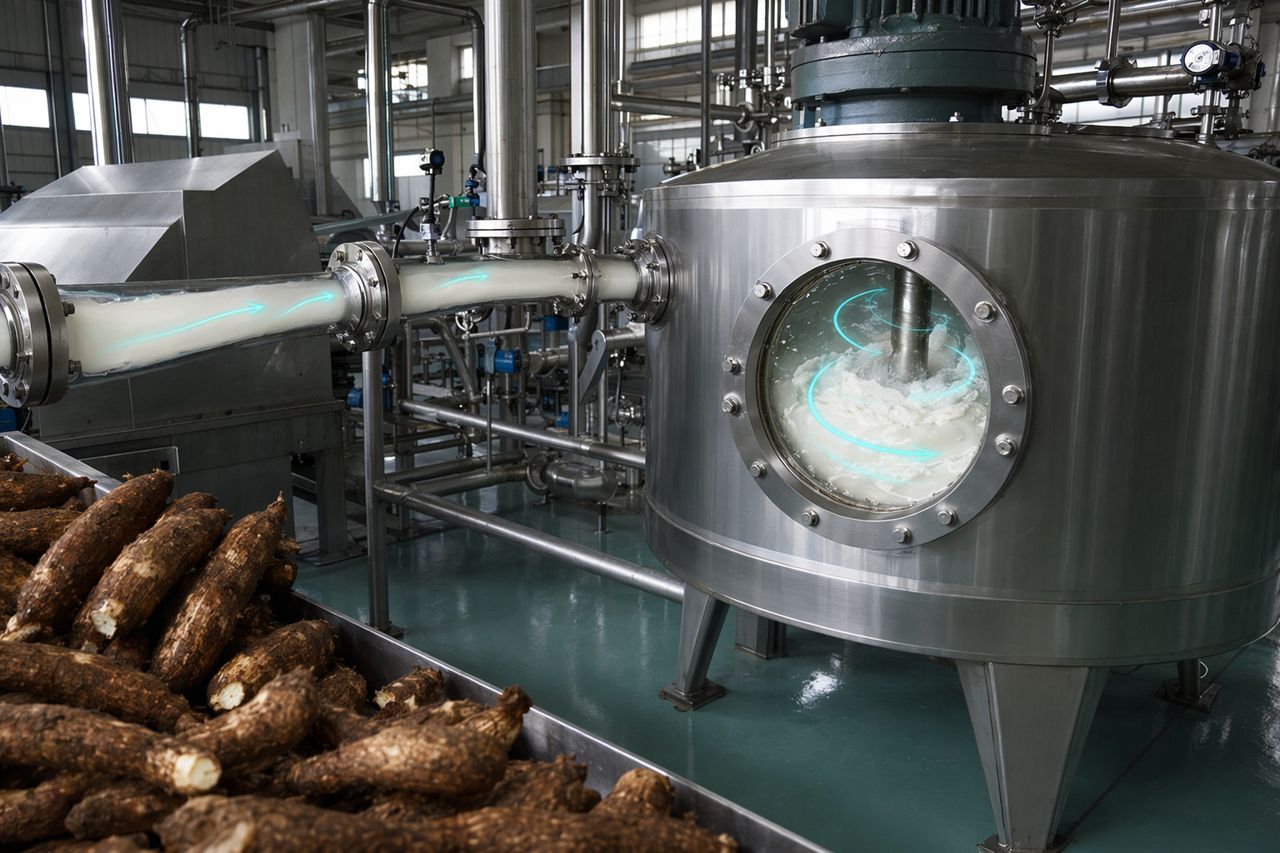
Cassava starch plants run on flow discipline. When slurry viscosity climbs, pumps work harder, screens blind faster, hydrocyclone behaviour shifts, and operators spend more time correcting the line than controlling it.
Amylase can thin a starch stream fast, which is exactly why it has to be placed with care in a plant whose product is starch. Enzymesconnect supplies amylase for the streams where controlled starch breakdown is the goal: side streams, residue going to sugar or ethanol, and cassava-derived hydrolysates. Supply is wholesale and bulk for starch producers, processors and resellers; grade, quantity and terms are quoted per order.
Where amylase fits in cassava starch operations
Amylase breaks down starch chains into shorter fragments. The same starch-thinning action is used to remove sizing from fabric, as a German-language page on desizing with fungal alpha-amylase explains. In a cassava starch factory, that can be valuable when the goal is to reduce viscosity, improve pumpability, or prepare selected streams for downstream conversion.
It is not a generic additive for every point in the native starch line. In the wrong location, uncontrolled hydrolysis can affect product recovery, quality targets, or customer specifications. The value comes from placing the enzyme where controlled thinning is useful and where the plant can manage time, temperature, pH, and separation requirements.
Typical evaluation areas include:
- High-viscosity cassava starch slurry handling
- Controlled hydrolysis before further conversion steps
- Slurry transfer and holding systems where thickness causes instability
- Process side streams where starch load creates pumping or handling issues
- Wastewater or residue-related streams where viscosity reduction supports easier movement or treatment preparation
- Specialty cassava-derived starch applications requiring managed liquefaction behavior
How liquefaction plants already run amylase on cassava
The clearest use of amylase on cassava is not in the starch line at all but in liquefaction, where starch is meant to be broken down. Heat-stable alpha-amylase made for the alcohol industry liquefies starchy raw material such as corn, cassava and wheat. It is typically a liquid grade from Bacillus licheniformis fermentation, working across 80-100 °C, the temperatures of starch cooking and liquefaction. Its optimum pH is 5.0-6.0, with an effective range of 4.5-7.0.
| Liquefaction grade | Typical value |
|---|---|
| Raw materials | Corn, cassava and wheat starchy material |
| Working temperature range | 80-100 °C |
| Optimum pH | 5.0-6.0 |
| Effective pH | 4.5-7.0 |
Those temperatures belong to cooking and liquefaction, far above a native starch wet end, which is why a heat-stable grade fits a residue-to-ethanol or syrup stream and not the extraction line.
What plants are usually trying to fix
Viscosity problems rarely show up as one isolated issue. They usually appear as a cluster of small losses that operators recognize immediately.
Harder pumping and uneven transfer
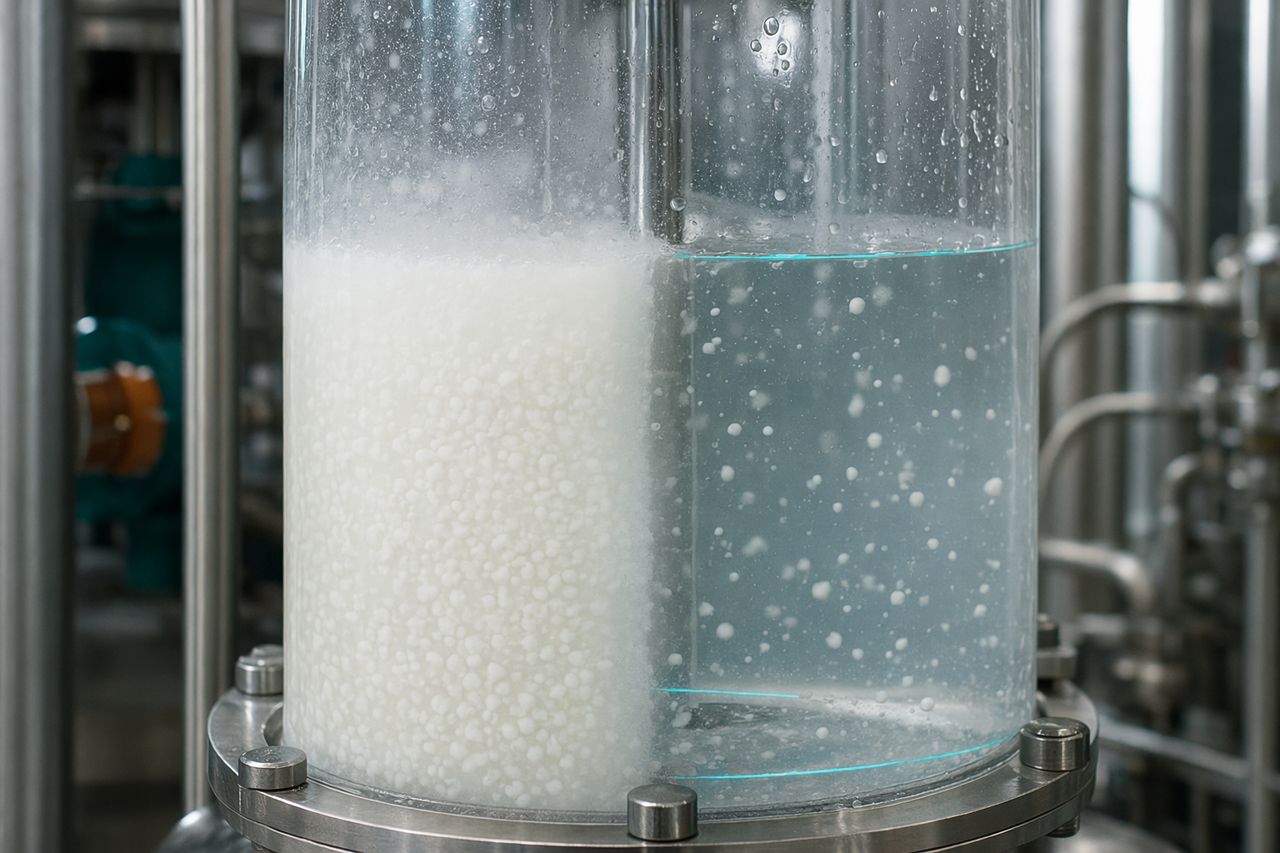
Thick slurry changes the way the line behaves. Pumps pull more load, flow becomes less predictable, and operators may compensate with dilution or manual intervention. Amylase can help reduce thickness where controlled hydrolysis is acceptable for the target stream.
Separation instability
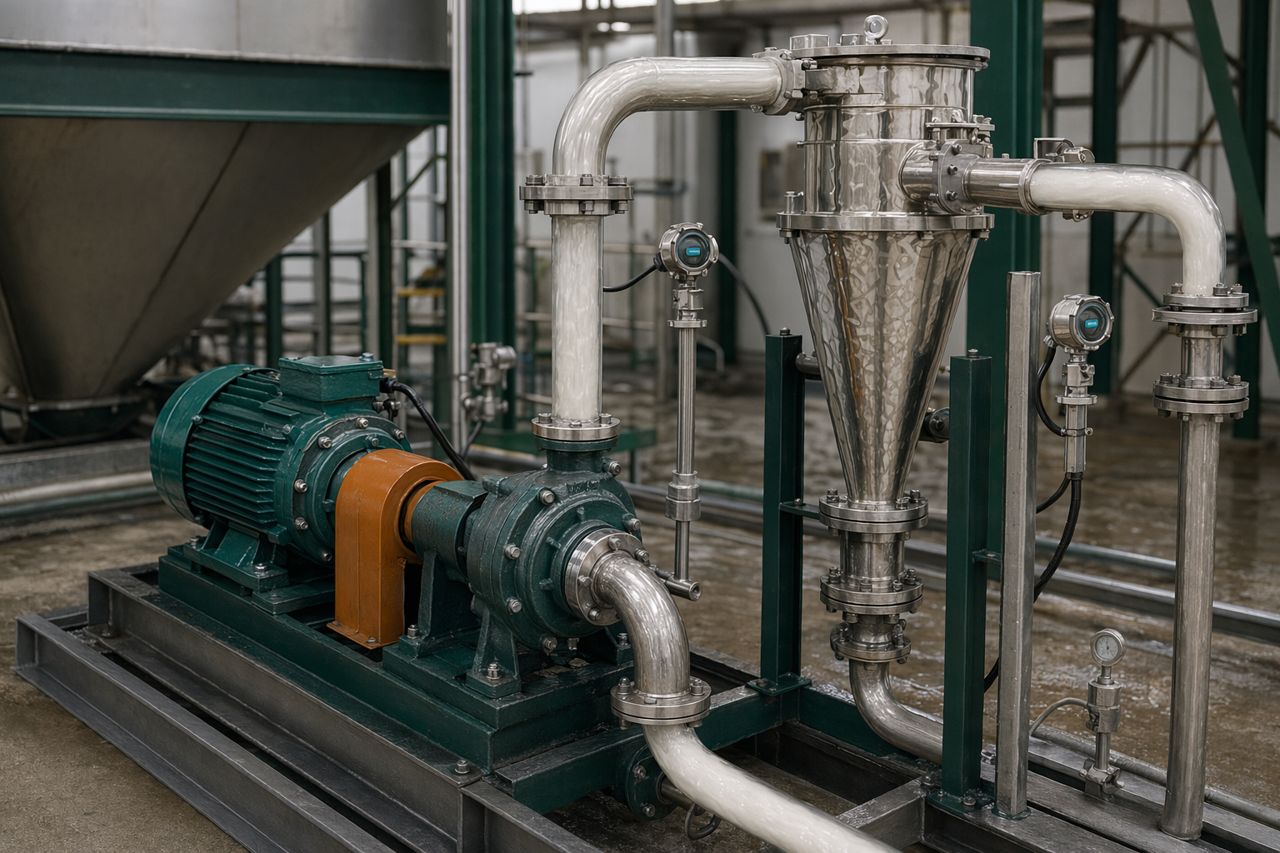
Hydrocyclones, screens, and other separation equipment depend on consistent feed behavior. When viscosity moves outside the practical operating window, separation may become less predictable. Better viscosity control can support steadier operation, especially in streams designed for enzyme treatment.
Holding tank and pipeline drag
A slurry that looks manageable at one point may become difficult after holding, cooling, or concentration changes. Amylase selection should consider how the slurry behaves over time, not just at the dosing point.
Downstream conversion control
For plants producing cassava-derived hydrolysates or modified process streams, amylase is often used as a front-end tool to bring viscosity into a workable range before additional processing. The aim is controlled thinning, not uncontrolled breakdown.
Our approach: controlled viscosity reduction, not guesswork
Enzymesconnect works with cassava processors to narrow the enzyme choice around the actual production problem.
We look at:
- The stream being treated and whether starch hydrolysis is acceptable there
- Temperature and pH conditions already present in the process
- Available residence time before separation, heating, cooling, or further conversion
- Slurry solids behavior and mixing quality
- Existing pump, pipe, tank, and hydrocyclone constraints
- Cleaning schedule, process variability, and operator control points
- Packaging, storage, lead time, and supply continuity requirements
That practical review helps prevent two common problems: under-treating the stream and seeing no plant benefit, or over-treating it and creating avoidable quality or yield risk.
Buyer value for cassava starch factories
A well-matched amylase program can support measurable operational value, depending on the stream and process target.
Potential benefits include:
- Lower viscosity in selected cassava starch slurries
- More stable pump and pipeline behavior
- Reduced need for reactive dilution in suitable streams
- Improved transfer consistency between process stages
- Easier handling of viscous side streams
- Better preparation for controlled starch conversion
- More predictable process response across root quality changes
- Lower operator burden from viscosity-driven corrections
The result is not just a thinner slurry. The value is a line that behaves more consistently.
Dose discipline matters
Enzyme cost is only one part of the decision. The larger risk is poor dose discipline: adding enzyme without a clear process objective, without a reliable addition point, or without knowing when the reaction should stop.
Enzymesconnect helps plants think through practical controls, including:
- Where the enzyme should enter the process
- How mixing will distribute it through the slurry
- Whether the treated stream has enough time for useful action
- How the plant will avoid carryover into sensitive areas
- How operators will recognize the target viscosity window
- How procurement will secure repeatable supply from batch to batch
For cassava processors, this matters because root variability is real. Starch content, fiber load, freshness, and seasonality can all affect slurry behavior. The enzyme program has to tolerate plant variation, not just look good in a lab conversation.
Product selection considerations
The right amylase depends on the target process. Enzymesconnect can help assess whether your plant needs an enzyme profile designed for rapid viscosity reduction, broader operating tolerance, or more controlled hydrolysis over a defined residence period.
Selection factors may include:
- Desired viscosity drop in the treated stream
- Whether the stream is destined for native starch recovery, conversion, feed, wastewater handling, or another use
- Process temperature window
- pH conditions
- Contact time
- Sensitivity to over-hydrolysis
- Compatibility with existing processing aids
- Storage and handling preferences at the factory
We focus on the commercial fit as much as the technical fit, because a viscosity-control enzyme is only useful if your team can buy it, store it, dose it, and run it consistently.
Important caution for native starch production
For factories producing native cassava starch, amylase must be evaluated carefully. If the main product stream requires intact starch granules and high recovery, uncontrolled amylase exposure can work against the production goal.
That is why Enzymesconnect does not recommend blanket addition across the line. We help identify the right stream, the right operating window, and the right control method before scale-up.
Why Enzymesconnect
Enzymesconnect is built for industrial buyers who need more than a catalog item. We support cassava starch factories with practical enzyme matching, supply planning, and process-aware technical discussion.
You get:
- A focused enzyme supplier for cassava starch streams
- Practical guidance around addition point and process fit
- Commercial packaging and procurement support for factory use
- Clear communication for plant managers, process engineers, and purchasing teams
- Quote support based on your stream, target, and operating conditions
Request a quote
Wholesale and bulk amylase supply for cassava starch producers, processors and resellers. Tell us which stream you want to treat, the viscosity or handling problem, its temperature and pH, the approximate quantity and the delivery country. We review the application and reply with a fit-for-purpose recommendation and quote.