Cassava Pulp Processing Enzyme for Starch Recovery
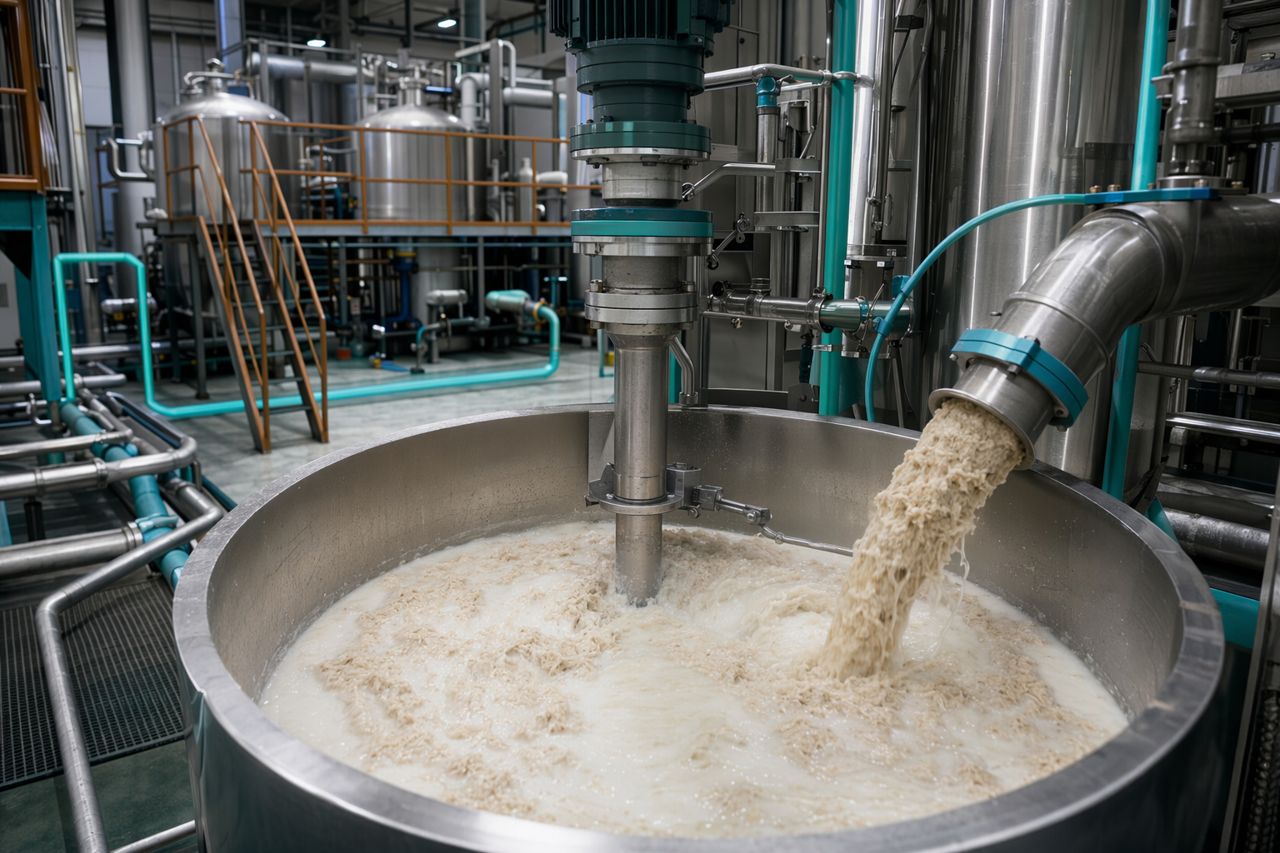
Cassava pulp still carries value after rasping, screening and primary extraction. When starch stays bound in fibrous pulp, the plant pays for it twice: first as lost product, then again through heavier separation, wetter residue and higher wastewater load.
Enzymesconnect supplies cellulase and pectinase programs for cassava and tapioca starch factories that want more recoverable starch from the same root intake, without turning the line into a dosing experiment. We supply plants directly and through distributors; quantity, pack format and terms are quoted per order.
Symptoms that point to starch bound in the pulp
Starch losses rarely show up in one dramatic place. They build up in wet fibre, thick mash, slow screens and rework loops that the shift team has learned to tolerate. Typical signs:
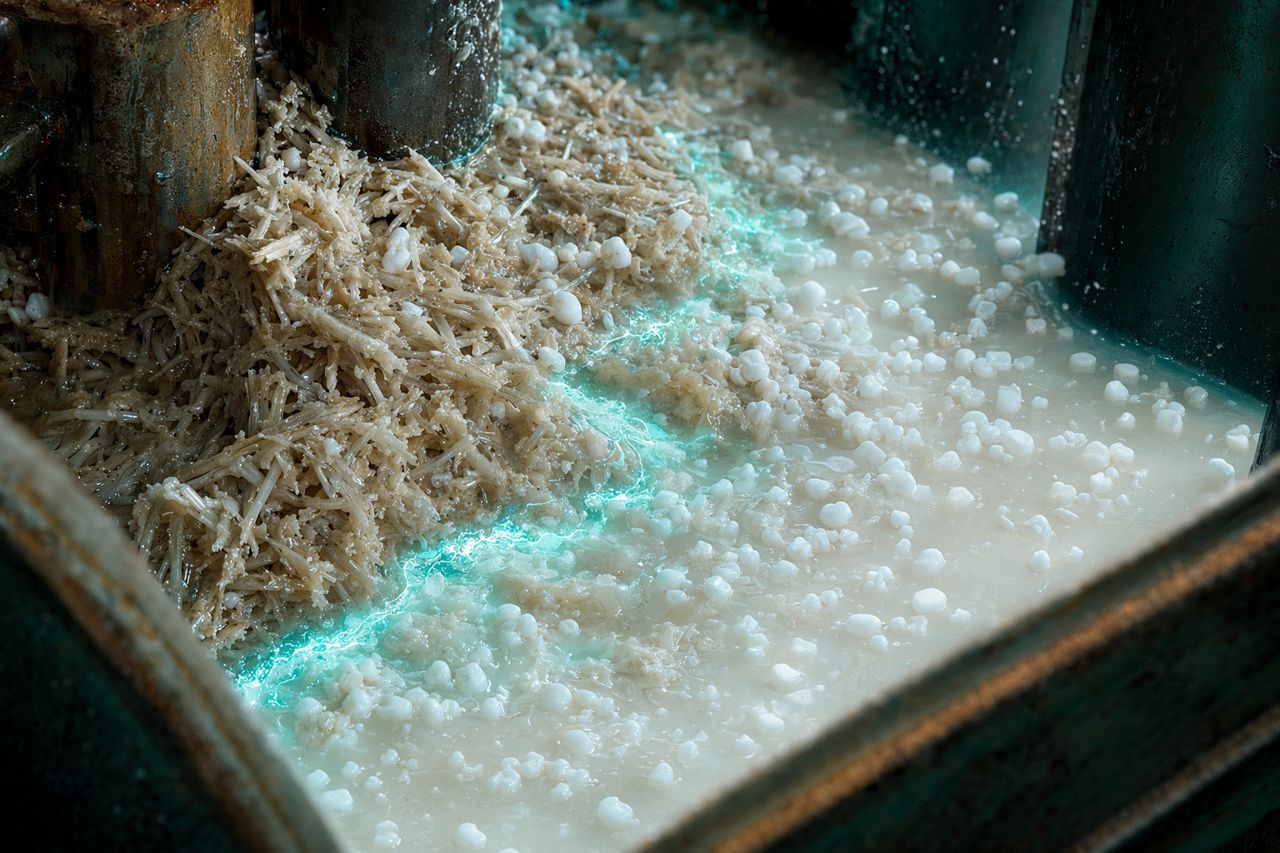
- Visible starch in discharged wet pulp, or pulp that looks rich, bright or pasty after extraction
- Thick or stringy slurry after rasping
- Lower screen throughput during variable root campaigns
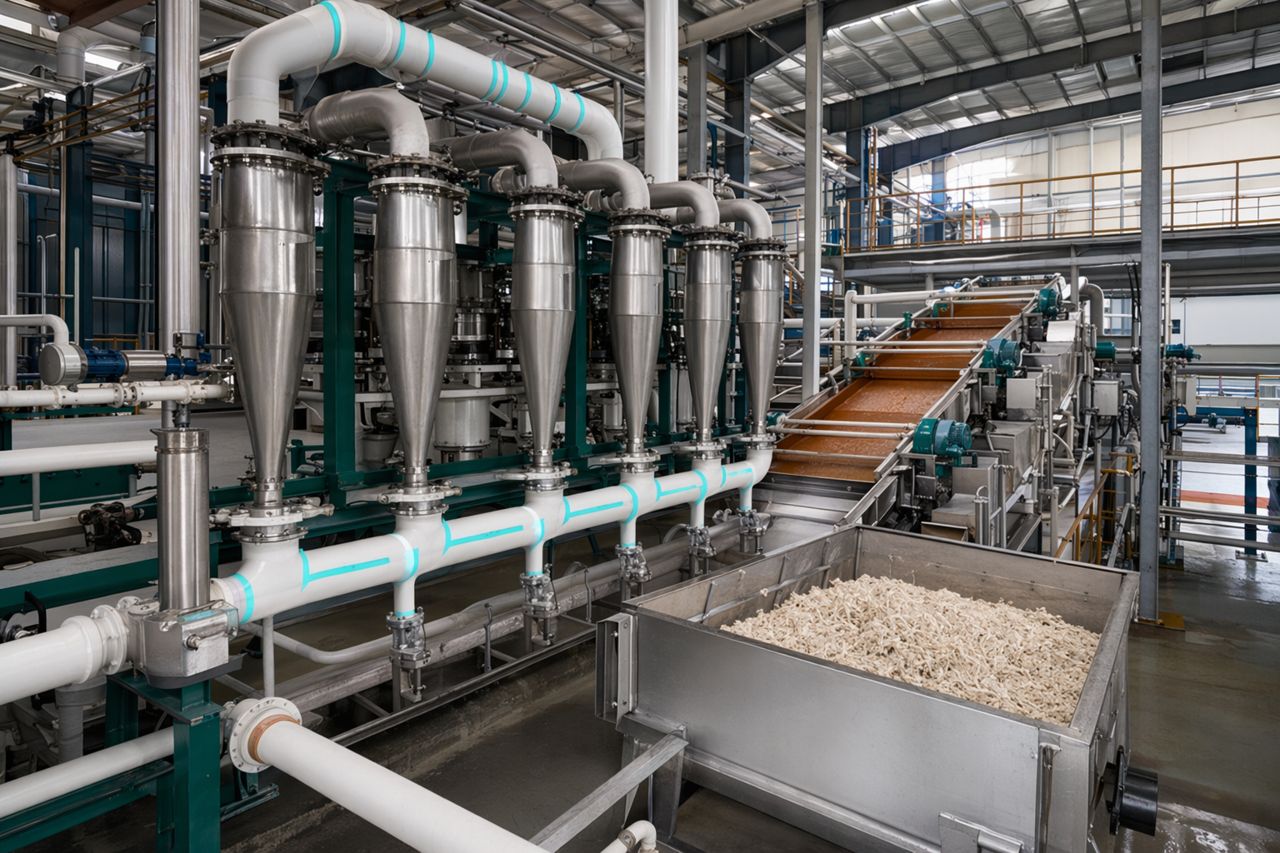
- Poor separation sharpness in hydrocyclones and more fines in process water
- Higher recycle load and inconsistent starch brightness
- Operators adding water or mechanical intensity to compensate
When viscosity and fibre-bound starch rise together, the extraction section works harder but does not always recover more.
How the enzyme supports recovery
The program is used where cassava pulp and process water can be mixed with enough contact time and control. The enzyme works on the non-starch matrix around the starch granules, loosening the fibrous structure so washing, screening and separation equipment can recover starch with less resistance.
For the plant team, that can support:
- Better starch extractability and lower residual starch in discharged pulp
- More consistent slurry flow through screens and separation stages
- Better response from existing hydrocyclone and dewatering systems
- Less avoidable load going into residue and wastewater streams
- A clear basis for yield discussions between production and procurement
How plant-extraction plants use the same cell-wall enzymes
Extraction-grade enzymes built to free useful compounds from plant stems, leaves and flowers run on a main enzyme system of cellulase and pectinase. The two are paired because together they act strongly on the components of the plant cell wall, so the material held inside is released more easily. The enzyme step sits straight after crushing the raw plant material, before water extraction, filtration and concentration; pectinase, amylase, cellulase and protease are the enzymes extraction plants choose between at that step. Such a grade is dedicated to plant extraction rather than a general-purpose cellulase.
| Extraction-grade cellulase-pectinase | Typical value |
|---|---|
| Main enzyme system | Cellulase and pectinase working together |
| Working temperature range | 40-55 °C |
| Working pH range | 4.5-6.0 |
| Position in the process | After crushing, before water extraction and filtration |
In a cassava line the matching point is the pulp re-slurry stage, where crushed tissue meets water ahead of the secondary screen.
What this means for your trial: ask any supplier for the working temperature and pH window of the grade first, then measure your own re-slurry water before comparing offers. The common mistake is to compare cell-wall enzymes on a data sheet and then trial them at a dosing point the grade was never built for.
Where it fits in a cassava starch factory
Pulp re-slurry stage
The enzyme goes in when cassava pulp is re-mixed with process water, to release more starch before secondary screening or separation.
Secondary extraction loop
For factories already running a pulp recovery loop, the enzyme can raise the value of that loop by liberating starch that mechanical action alone leaves behind.
Pre-separation conditioning
Where slurry behaviour limits separation efficiency, enzymatic conditioning can give a cleaner feed to downstream equipment when process conditions allow.
Designed around dose discipline
A pulp enzyme program should not create uncertainty for operators. We agree dose windows, sampling points and checkpoints tied to your line, and help you evaluate:
- Pulp moisture and fibre behaviour
- Mixing point and residence time
- Temperature and pH at the dosing point
- Compatibility with screens, pumps and separation equipment
- How to avoid overdosing when roots are already easy to process
- Before-and-after residual starch in wet fibre
- Effect on slurry viscosity, drainage and solids handling
- Starch quality and brightness, so recovery does not cost specification
What a plant trial measures
| Indicator | Before treatment | During treatment |
|---|---|---|
| Starch remaining in wet fibre | Baseline from your normal sampling | Same sampling point and frequency |
| Slurry flow at extraction | Operator log of pump and screen behaviour | Same log, same shifts |
| Separation consistency | Hydrocyclone settings and corrections | Number of corrections per shift |
| Finished starch quality | Brightness and specification results | Same tests, same lab |
| Process water | Clarity and solids burden | Same measurement |
The goal is to confirm that the enzyme improves recovery without surprises for the mill team, and to document the value for procurement and finance approval.
What buyers should expect from a serious supplier
- Product selection matched to your pulp recovery goal
- Consistent batch documentation and procurement support
- Clear storage and handling guidance for factory teams
- Trial planning that respects uptime and shift routines
- Scale-up from first trial to regular purchasing
- Supply planning that avoids shortage and substitution
We do not present enzyme use as a fix for worn graters, poor washing or unstable feed. It is a targeted process aid for when the mechanical system is sound but the pulp still carries too much starch.
The business case
- How much recoverable starch is still in the pulp stream?
- Can the plant release more of it without disrupting throughput?
- Does the recovered value justify controlled enzyme use?
When the answer is yes, the gain shows up in yield, residue handling, separation consistency and wastewater management, and it comes from material already inside the gate.
Request a quote
Wholesale and bulk supply of cassava pulp processing enzymes for starch producers, processors and resellers. To get a fast, accurate quote, send your daily root intake, your pulp recovery setup, the problem you want to fix, the expected quantity and the delivery country.