Enzyme Supplier for Cassava Starch Processing
A cassava starch plant does not need another product list. It needs an enzyme supplier that can say where starch is being lost, which enzyme fits that point in the line, how to prove the result in a plant trial, and how to keep the same grade arriving once the program works.
Enzymesconnect supplies cellulase, pectinase and amylase programs to cassava and tapioca starch factories, and to the distributors and agents who serve them. Supply is wholesale and bulk; minimum order, pack format and terms are quoted per order.
What to send in an inquiry
A short inquiry gets a faster, more accurate quote. These are the details we ask for first:
| Send us | Why it matters |
|---|---|
| The problem: pulp loss, viscosity, separation, dewatering or wastewater | It decides the enzyme category and the dosing point |
| Approximate root intake or starch output per day | It sizes trial and production quantities |
| Where the enzyme would go in your line | Contact time and temperature there decide the grade |
| Delivery country and whether you buy for your own plant or for resale | It decides pack format, documents and shipping terms |
| Distributors: your customers' plant types | We can quote for several plants in one request |
Minimum order, lead time and price are quoted per order. We do not publish fixed figures because they depend on grade, quantity and destination.
Built for the way cassava starch plants actually run
Cassava is variable. Root age, soil load, fibre structure, rasping efficiency, residence time, water quality and cleaning discipline all change how the starch line behaves. A stable enzyme program has to account for that variability instead of assuming a perfect feedstock.
We match enzyme function to the plant conditions that matter:
- Slurry viscosity and pumpability after rasping
- Bound starch release from pulp and fibre fractions
- Fibre separation performance
- Starch milk clarity and handling behaviour
- Recovery losses in wet cake, overflow and process water
- Downstream load on wastewater treatment
- Trial control, dosing discipline and supply continuity
Where enzymes can support the cassava starch flow
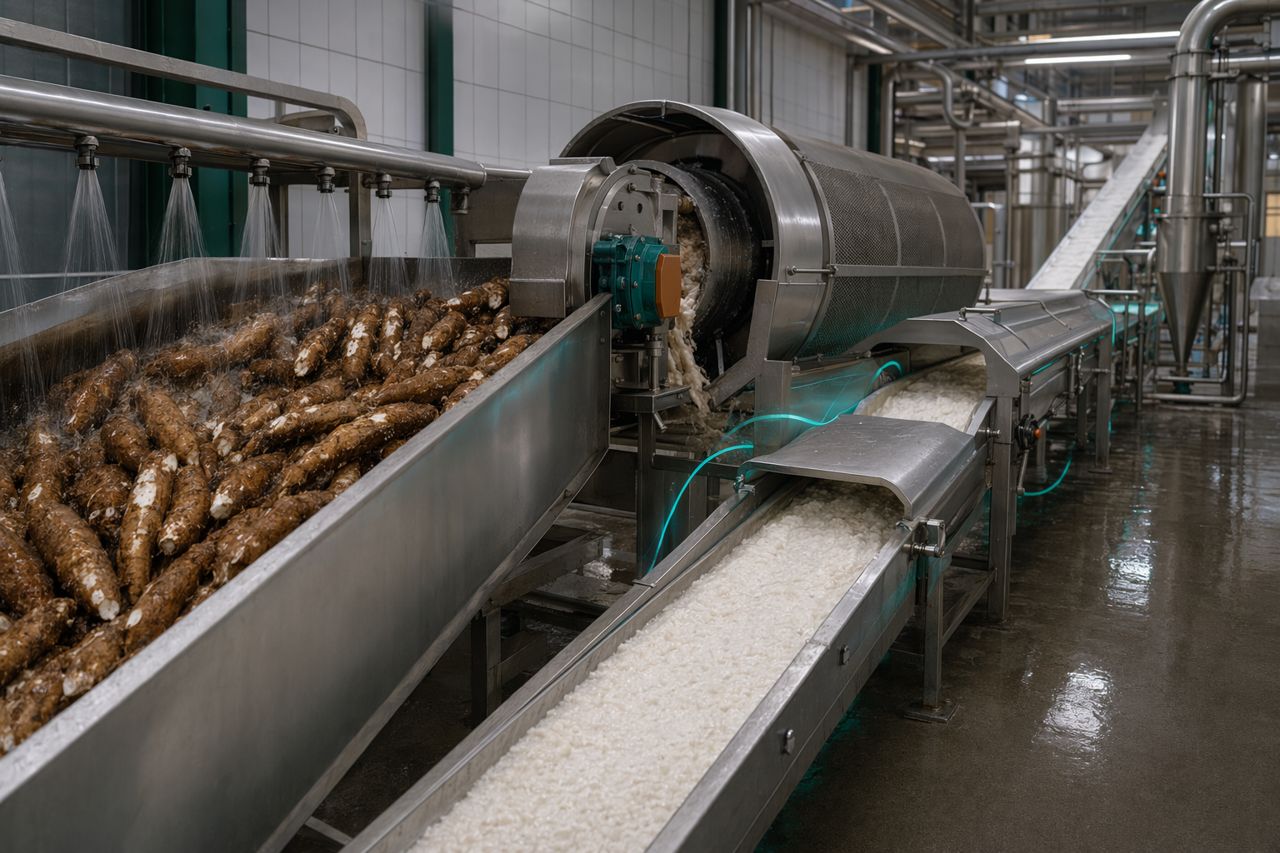
Washing and root preparation
Enzymes do not replace good washing, peeling discipline or feed preparation, but upstream consistency affects every later step. A program that performs well on one root lot may need timing or dose adjustment on another, which matters for plants with seasonal roots or mixed growers.
Rasping and starch release
Rasping opens the root structure. Enzyme support can loosen cell-wall material and release starch that mechanical action alone leaves tied up in pulp, with less dependence on aggressive mechanical correction.
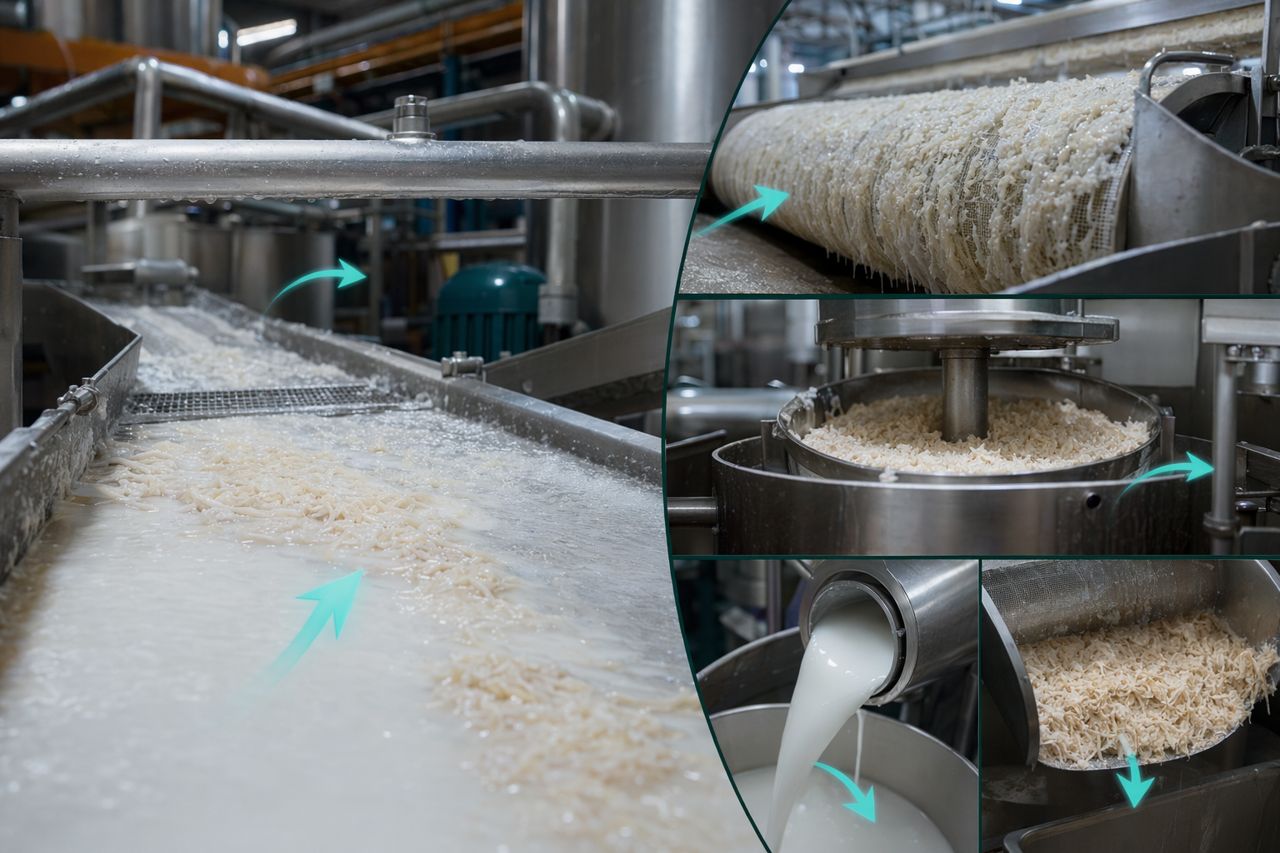
Extraction and pulp handling
If pulp carries too much starch, the plant pays twice: lost product and higher load downstream. We evaluate enzyme options for fibre-bound starch and slurry behaviour in your actual extraction setup, not a laboratory description.
Fibre separation
Separation equipment performs best when slurry behaves predictably. A well-matched program may support smoother fibre separation, more consistent slurry movement and less starch carryover with pulp.
Dewatering and starch milk handling
Starch milk quality affects dewatering, drying load and final product consistency. We review where the enzyme enters, how long it has to work, what equipment follows and how operators confirm the line is behaving.
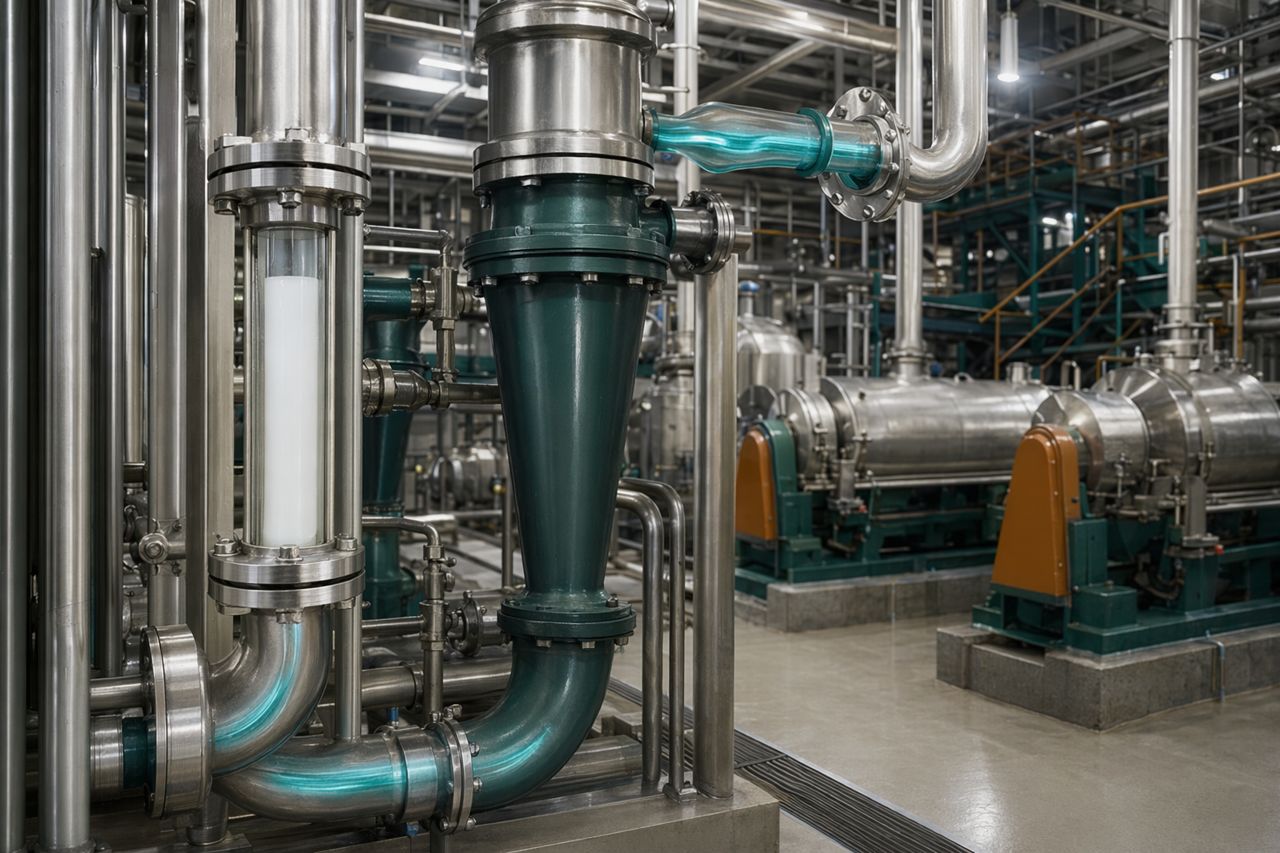
Recovery losses and wastewater load
Lost starch and unstable process water show up as a higher wastewater burden. Enzymes are not a substitute for separation discipline, but they can be part of a loss-reduction plan with measurable outcomes.
Enzyme categories used in cassava starch processing
| Category | Typical job in a cassava plant | Watch-out |
|---|---|---|
| Cellulase | Opening cell walls so starch leaves the pulp | Needs enough contact time at the dosing point |
| Pectinase | Reducing pectin-related viscosity and improving release | Results vary with root freshness |
| Cellulase-pectinase blends | Both jobs in one product | Compare blends on your own pulp, not on a data sheet |
| Amylase | Liquefying side streams or residue going to sugar or ethanol | Never in the native starch line, where it costs yield |
Not every factory needs every function. Often the right answer is a narrower program with better placement, better mixing and better operator control.
What buyers should expect from a serious supplier
- Clear application fit, not generic claims
- Practical trial design for your line
- Compatibility with existing equipment and operating habits
- Documentation for procurement and technical review
- Pack formats suited to plant handling, quoted per order
- Reorder planning so a working program is not interrupted
- Technical contact when root quality changes
Distributors and resellers get the same support for each plant they serve, plus one quote covering several destinations where needed.
Trial planning without plant-floor confusion
Good enzyme trials are controlled, observable and easy for operators to run. We help define:
- The process objective
- The dosing point
- The comparison period
- The operating conditions to hold steady
- The line observations to record
- The recovery and separation indicators to review
- The decision criteria for scale-up
Request a quote
Wholesale and bulk enzyme supply for cassava starch producers, processors, distributors and resellers. Tell us the problem, the approximate quantity, where the enzyme would go in your line and the delivery country, and we will reply with a focused recommendation and quote.