Enzyme aid for cassava rasping and cell wall disruption
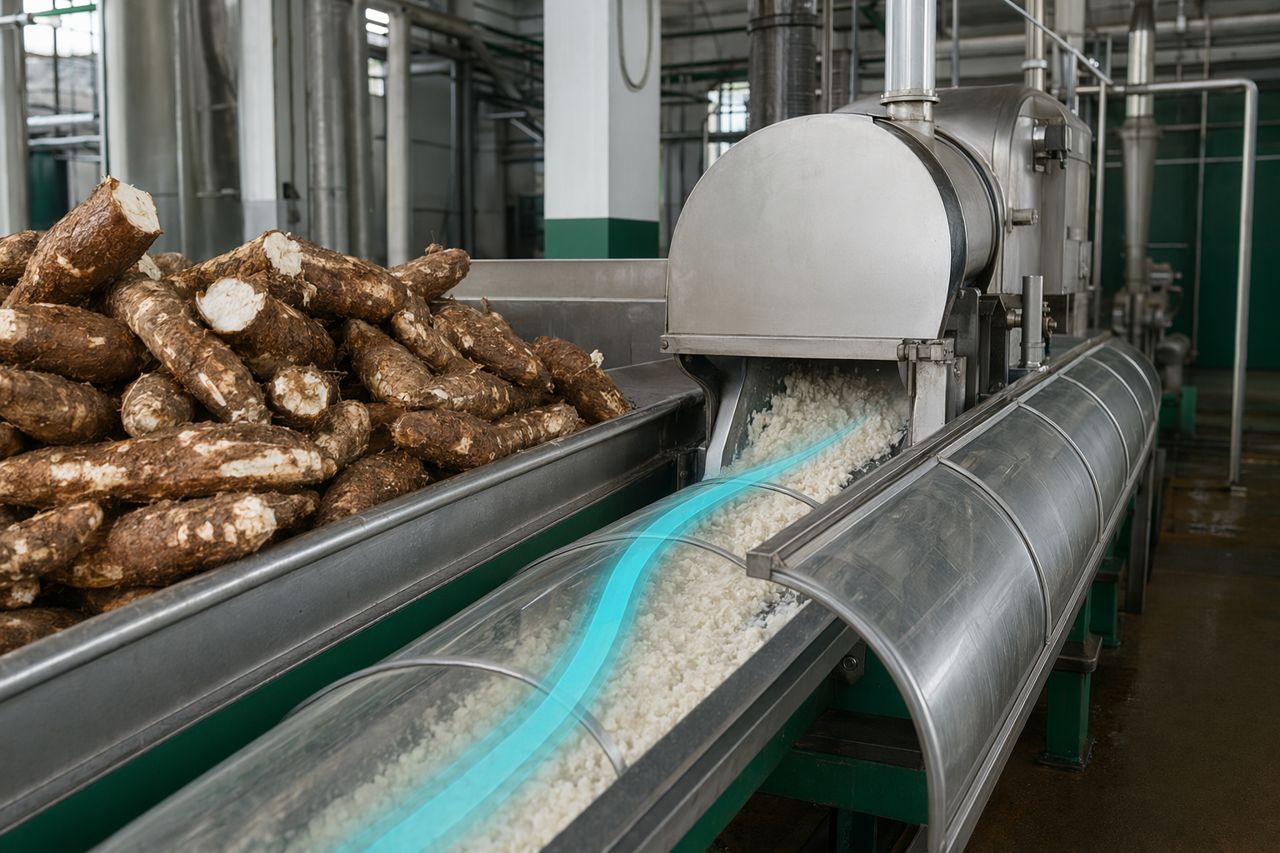
Mechanical rasping opens the cassava root. The right enzyme aid helps finish the job.
Enzymesconnect supplies cellulase and pectinase process aids for cassava starch factories that want better starch release after rasping, steadier slurry behavior, and fewer losses trapped in fibrous plant material. We work as a practical enzyme supplier for cassava starch processing, with product selection and dosing guidance built around plant realities: root variability, water balance, screen loading, separation demand, uptime, and procurement risk.
[Embedded faceless explainer video: Cassava rasping enzyme aid, cell wall loosening, starch release, and quote request CTA]
Built for the rasping section, not for the lab shelf
Cassava roots are not uniform. Freshness, fiber load, peel carryover, seasonal dry matter, and rasp condition all affect how much starch becomes available to the extraction train. Even with well-maintained rasps, some starch can remain bound inside disrupted but not fully opened cell structures.
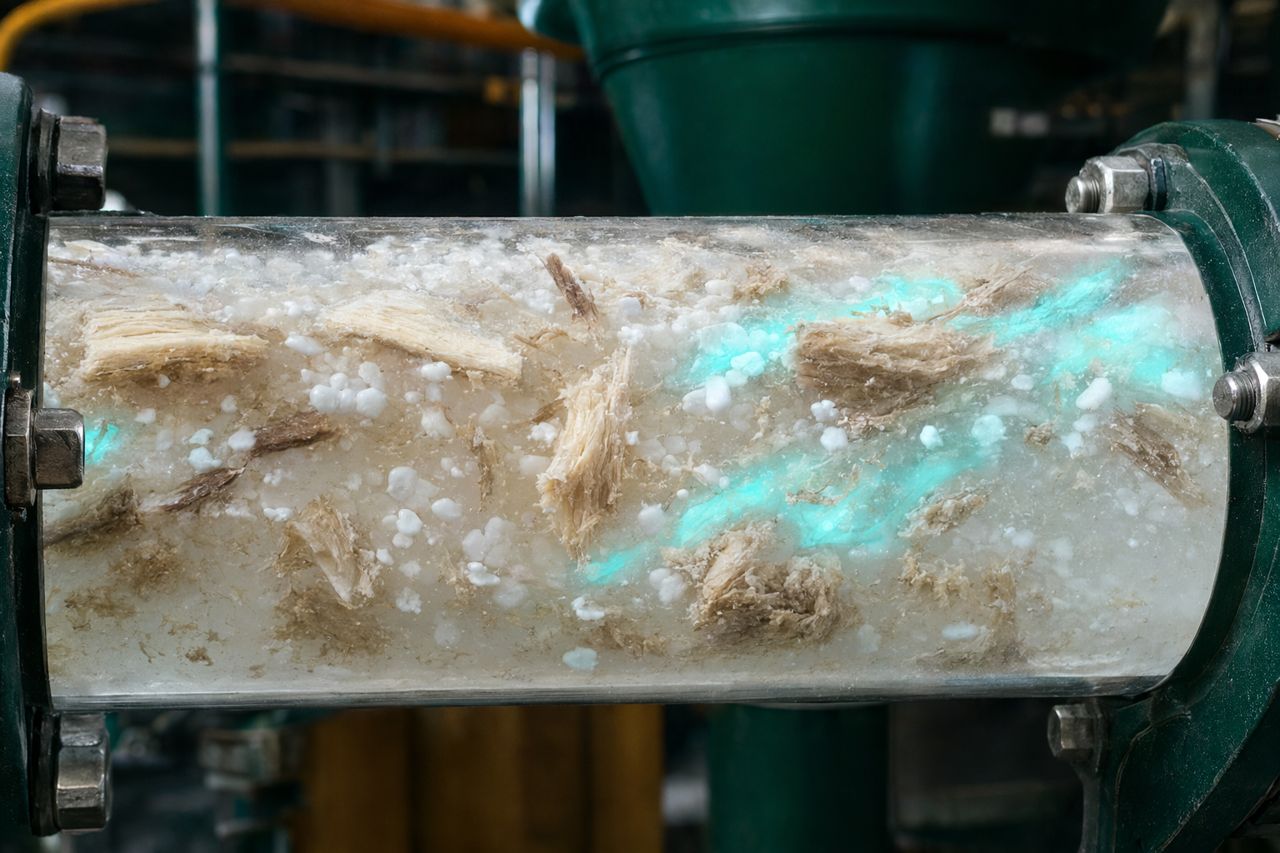
Our cellulase and pectinase enzyme aids are used to help loosen the cellulose- and pectin-rich plant matrix around starch granules after mechanical size reduction. The result is a more workable slurry and a better chance of moving valuable starch forward into screening, washing, and separation instead of leaving it with pulp.
What the enzyme aid is designed to support
Better starch release after mechanical rasping
The enzyme aid targets the plant cell wall structure that can hold starch back after rasping. By supporting cell wall loosening, it helps factories improve access to starch granules already exposed by mechanical action.
More consistent slurry behavior
Cassava slurry can shift quickly with root quality and rasp wear. A disciplined enzyme program can help reduce stubborn fiber-bound behavior and make the slurry easier to manage through downstream equipment.
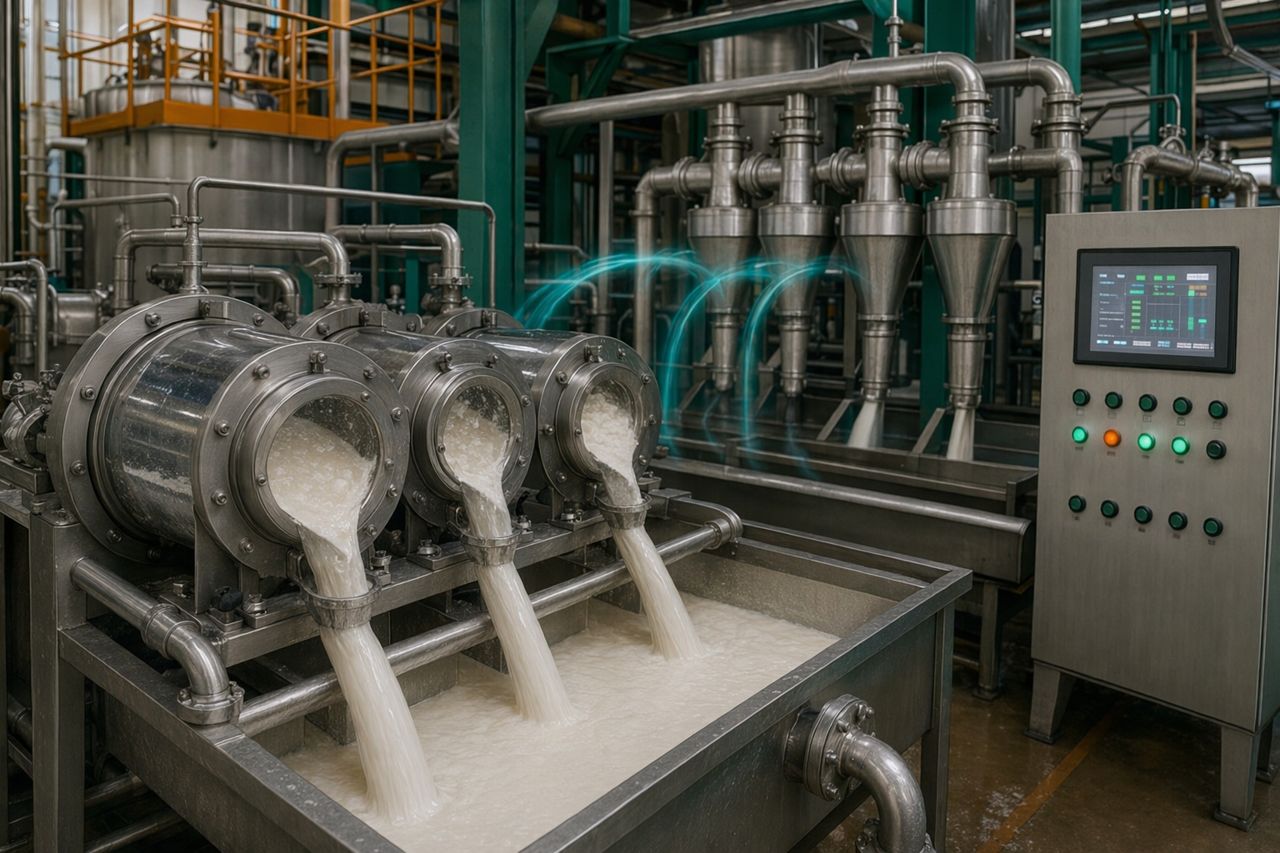
Cleaner load into extraction and separation
When starch releases more effectively, screens and hydrocyclones can operate with a more predictable feed. That supports steadier process control and helps plant teams avoid chasing variability across multiple sections at once.
More value from existing equipment
This is not a replacement for sharp rasps, proper gap settings, stable dilution, or good screen maintenance. It is a process aid for plants that want more value from the mechanical work they already perform.
Where it fits in the process
The best dosing point depends on your line layout, slurry residence time, water addition strategy, and temperature profile. Common evaluation points include:
- Immediately after rasping, where fresh cellular material enters the slurry stream
- In a controlled mixing or holding step before primary screening
- Ahead of extraction stages where improved release may reduce starch carryover in pulp
Enzymesconnect helps define the practical contact window, mixing requirement, and dose discipline so the enzyme is used where it can create process value without disrupting throughput.
Practical plant signals to watch
A rasping enzyme aid should be judged by production-relevant indicators, not just by a supplier claim. During a plant trial, teams often monitor:
- Starch retained in wet pulp or fibrous residue
- Slurry consistency and pumpability
- Screen loading and blinding tendency
- Recovery trend across root lots
- Separation stability downstream
- Finished starch brightness and cleanliness indicators
- Waste stream solids burden
- Operator workload during variable root runs
We help structure trials so procurement, production, and quality teams can evaluate the same operating facts.
Cellulase and pectinase, applied with dose discipline
Cellulase supports loosening of cellulose-rich cell wall structures. Pectinase supports breakdown of pectin networks that contribute to plant tissue cohesion and slurry behavior. Used together or individually, the right selection depends on the root material, target process effect, residence time, and factory constraints.
Enzymesconnect does not push a one-size-fits-all formula. We help match the enzyme format and use plan to your production line, then support controlled adjustment instead of uncontrolled overdosing.
Why cassava starch factories choose Enzymesconnect
Plant-manager fluent technical support
We discuss rasp load, fiber behavior, slurry movement, screens, separation, and uptime in the same conversation. Our role is to help the factory make a clear production decision, not to bury the team in lab-only language.
Procurement built around supply reliability
Enzyme performance matters, but so does availability, lead time, documentation, packaging suitability, and batch-to-batch consistency. Enzymesconnect supports purchasing teams that need reliable supply without adding unnecessary qualification risk.
Trial guidance for real operating conditions
We can support a staged evaluation plan using your normal production line, your root supply, and your operating targets. The aim is to confirm whether the enzyme aid earns its place in your cost structure.
Good fit applications
This page is most relevant for cassava starch plants looking to:
- Improve starch release from rasped cassava tissue
- Reduce starch loss in pulp and fibrous residue
- Stabilize extraction when root quality changes
- Support smoother slurry transfer before screening
- Increase value from existing rasping capacity
- Reduce downstream variability caused by incomplete cell disruption
- Qualify a dependable enzyme supplier for cassava starch processing
Request a quote
Tell us about your cassava starch line, current rasping setup, target improvement, and any constraints around dosing point or trial timing. Enzymesconnect will recommend a suitable cellulase, pectinase, or blended process-aid approach for quotation.
Request a quote using the on-site contact form. Include your production context, packaging preference, destination, and expected monthly demand so we can respond with a practical supply proposal.