Enzyme Guidance for Cassava Pulp Dewatering and Process Water Load
Cassava pulp dewatering is where upstream variability becomes a cost line. Root age, fibre condition, rasping severity, dilution, screen performance and press behaviour all decide how much water stays trapped in the pulp, and every extra point of moisture is paid for again in pressing, drying, hauling or disposal.
Enzymesconnect supplies enzyme programs that help cassava pulp release water more evenly ahead of screw presses, belt presses and decanters, and reduce the load returning to process water. We supply starch factories directly and through distributors; quantity, pack format and terms are quoted per order.
Why pulp holds water in cassava starch plants
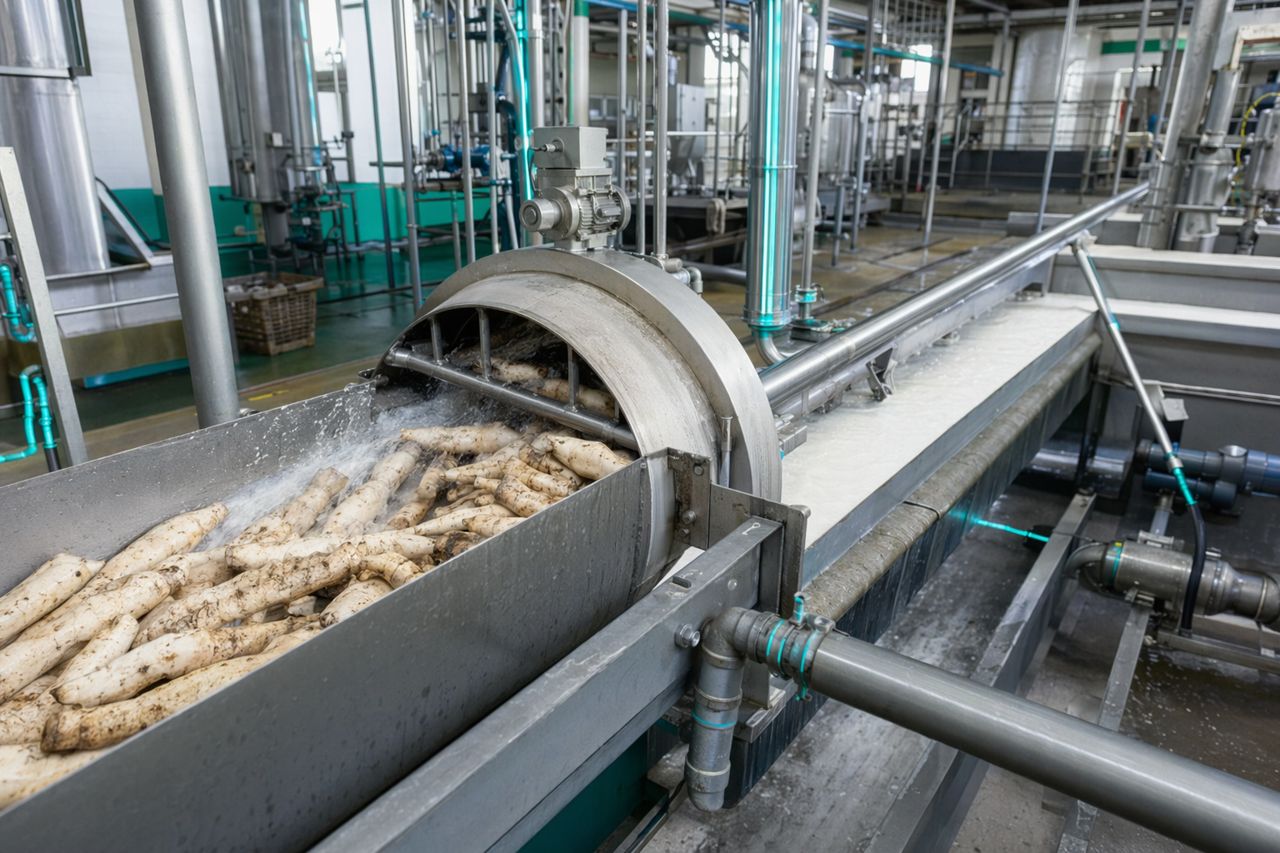
Cassava pulp is not a simple solid. It is a fibrous matrix carrying residual starch, fine cell-wall material, soluble organics, and process water. When that matrix stays tight, plants may see:
- Wet press cake or unstable cake moisture
- Higher transport or drying burden for pulp by-product handling
- Thick, slow-draining slurry ahead of presses or decanters
- Screens that blind faster during difficult crop periods
- More suspended material returning into process water loops
- Higher wastewater load after extraction and separation
Mechanical adjustment matters, but mechanics alone may not fully address the fiber-bound water problem. The right enzyme approach can help open selected structural components so water releases more consistently.
What a dewatering enzyme program can support
A cassava pulp dewatering enzyme program is usually designed around controlled breakdown of selected non-starch components in the pulp structure. Depending on the factory objective, enzyme selection may support:
Easier water release from pulp fiber
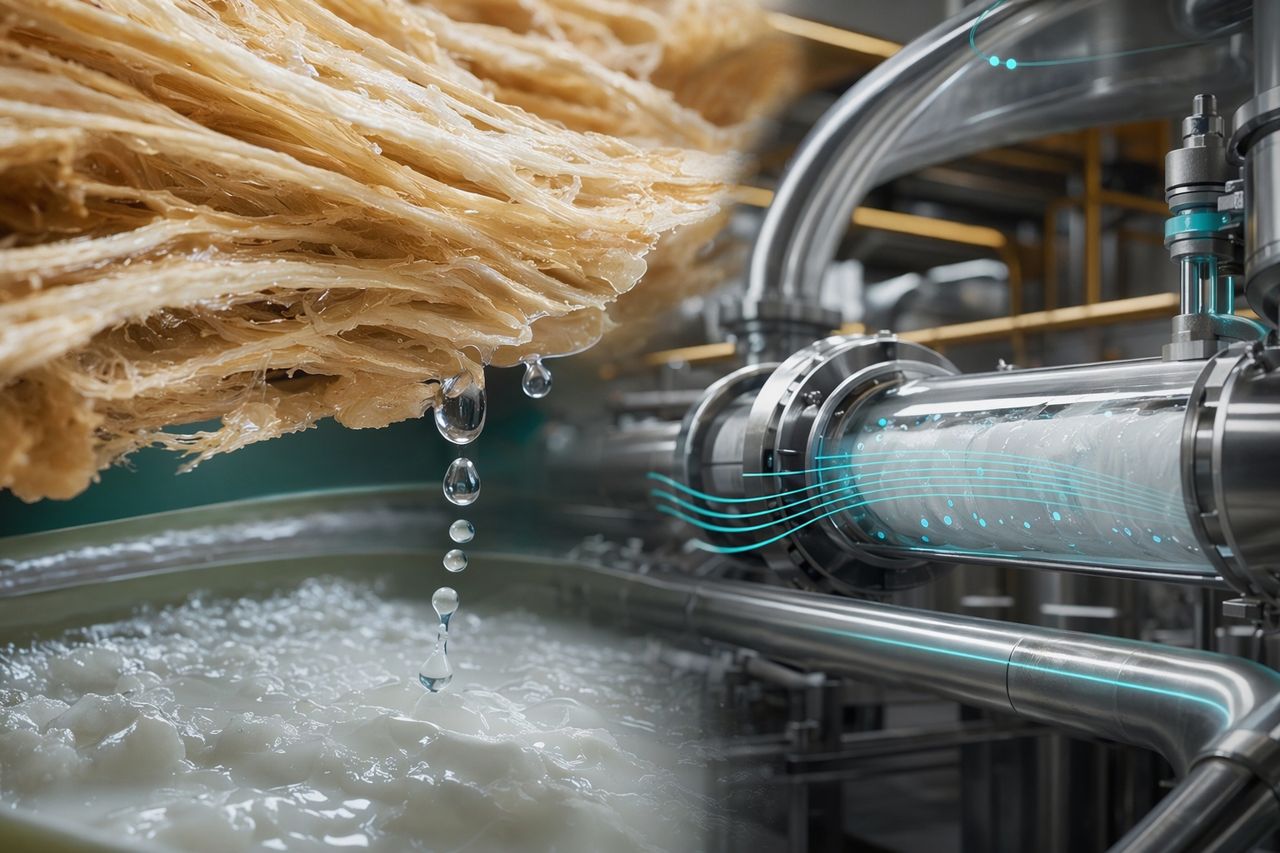
Targeted fiber modification can reduce water retention inside the pulp matrix, helping presses, screw dewatering systems, or decanters work against a less resistant material.
More stable slurry handling
When pulp behavior is less erratic, pumping, screening, and feed consistency can improve. This helps operators avoid overcorrecting dilution or press settings during variable root supply.
Lower process water burden
Better pulp separation can help reduce recirculated suspended load and organic carryover into process water management. That can support more predictable water balance and wastewater treatment planning.
Better by-product handling
A drier, more consistent pulp stream can be easier to convey, store, sell, feed into secondary processing, or manage as a by-product.
Screw presses, belt presses and decanters: where an enzyme helps
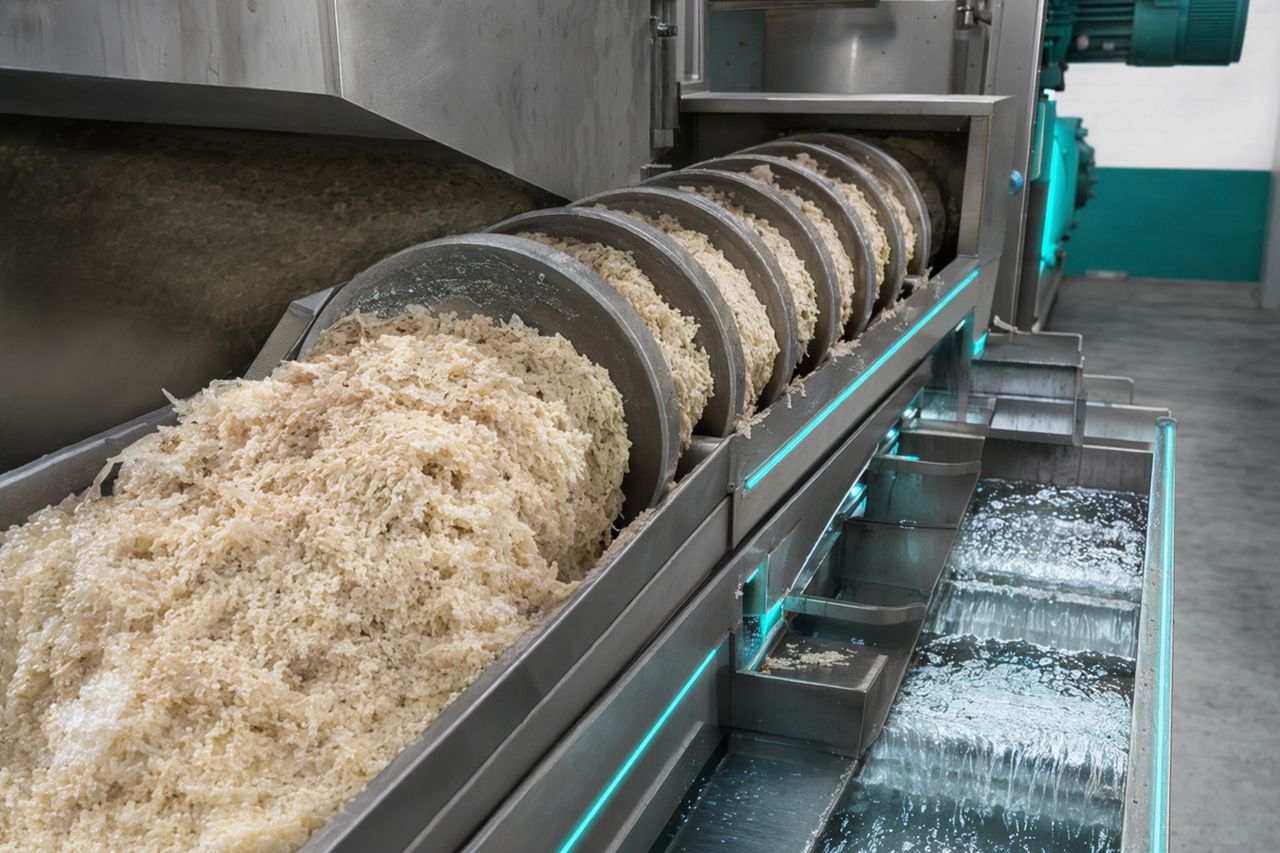
A screw press can only squeeze out water that the pulp is willing to release. When the fibre matrix stays tight and slimy, raising screw speed or back-pressure mainly pushes fines through the screen and wears the machine, while cake moisture barely moves. Belt presses and decanters show the same limit as blinding cloths or a cloudy centrate.
An enzyme step ahead of the press works on the material, not the machine. Opening part of the cell-wall structure gives the press a pulp that drains more evenly, so mechanical settings can stay steady through difficult root campaigns. It is worth evaluating when:
- Cake moisture swings with root lots although press settings are unchanged
- Operators raise back-pressure or screw speed and see more fines instead of drier cake
- Press screens or belt cloths blind faster in some campaigns
- Pulp drying, hauling or disposal cost is a large line in the site budget
No single universal dose works for every cassava plant
Cassava starch factories differ in root variety, harvest timing, grating setup, extraction layout, screen design, hydrocyclone configuration, water reuse strategy, and pulp outlet equipment. A dose that behaves well in one line may be wasteful, weak, or disruptive in another.
That is why Enzymesconnect does not lead with a generic promise. We start with process conditions and plant priorities:
- Where the enzyme can be introduced without disturbing extraction
- How much residence time is realistically available
- Whether the target is press cake moisture, slurry flow, water load, or all three
- How temperature and pH behave during normal production
- Which mechanical bottleneck limits dewatering today
- What procurement, storage, and dosing controls the plant can support
Where enzymes fit in the cassava starch flow
A dewatering-focused enzyme is not automatically added at the same point in every plant. Possible evaluation points may include pulp slurry zones after extraction, controlled holding sections before dewatering, or other locations where contact time and mixing can be managed.
The correct point depends on the factory layout. Poor placement can waste enzyme, create inconsistent results, or interfere with separation discipline. Good placement gives the enzyme enough contact with the target material while protecting starch quality and process rhythm.
Protecting starch quality while improving pulp handling
For cassava starch producers, dewatering support must not come at the expense of starch brightness, recovery, or process stability. Any enzyme recommendation should be checked against:
- Starch color and brightness expectations
- Residual fiber carryover into starch streams
- Viscosity behavior in slurry and recycle water
- Screen and hydrocyclone performance
- Odor, fermentation risk, and process holding time
- Cleaning load and sanitation practices
The objective is controlled assistance, not uncontrolled breakdown.
How Enzymesconnect helps evaluate the fit
We help technical and procurement teams move from guesswork to a disciplined evaluation. A typical review includes:
- Process mapping — pulp stream location, flow behavior, dewatering equipment, and water loop constraints.
- Problem definition — wet cake, poor drainage, press instability, suspended solids, wastewater load, or handling cost.
- Enzyme selection — targeted chemistry matched to fiber behavior and operating window.
- Trial planning — practical feed point, contact time, sampling plan, and operator observations.
- Commercial review — packaging, supply continuity, storage conditions, dosing simplicity, and cost-in-use logic.
What buyers should ask before choosing a supplier
- Can the supplier explain how the enzyme fits cassava pulp behaviour and your press type?
- Do they ask about your process water loop and dewatering equipment?
- Can they support a controlled plant trial without promising a fixed dose?
- Do they consider starch quality and separation performance?
- Can they quote trial and production quantities for your destination, and keep supply steady once the program works?
Enzymesconnect is built for that conversation, for factories and for the distributors who supply them.
Request a quote for your cassava pulp dewatering objective
Wholesale and bulk supply for cassava starch producers, processors and resellers. If wet pulp, unstable press behaviour or water load is costing your plant money, send us the pulp stream location, your dewatering equipment (screw press, belt press or decanter), the target improvement, the approximate quantity and the delivery country.
We review the fit and reply with a practical enzyme recommendation and quote.