Practical enzyme programs for cassava starch factories
Cassava starch recovery depends on many small controls: root quality, rasping condition, pulp opening, fiber release, slurry viscosity, separation load, wash water discipline, and dewatering behavior. ManiFlow Catalytics works with cassava starch producers to select enzyme programs that fit the real plant—not just the lab sheet.
If you need an enzyme supplier for cassava starch processing that understands uptime, slurry flow, starch brightness, procurement risk, and operator adoption, we are built for that conversation.
We support cellulase, pectinase, and amylase selection for plants looking to improve extraction, reduce bottlenecks, and make enzyme use easier to control shift after shift.
Where enzymes can improve your cassava starch line
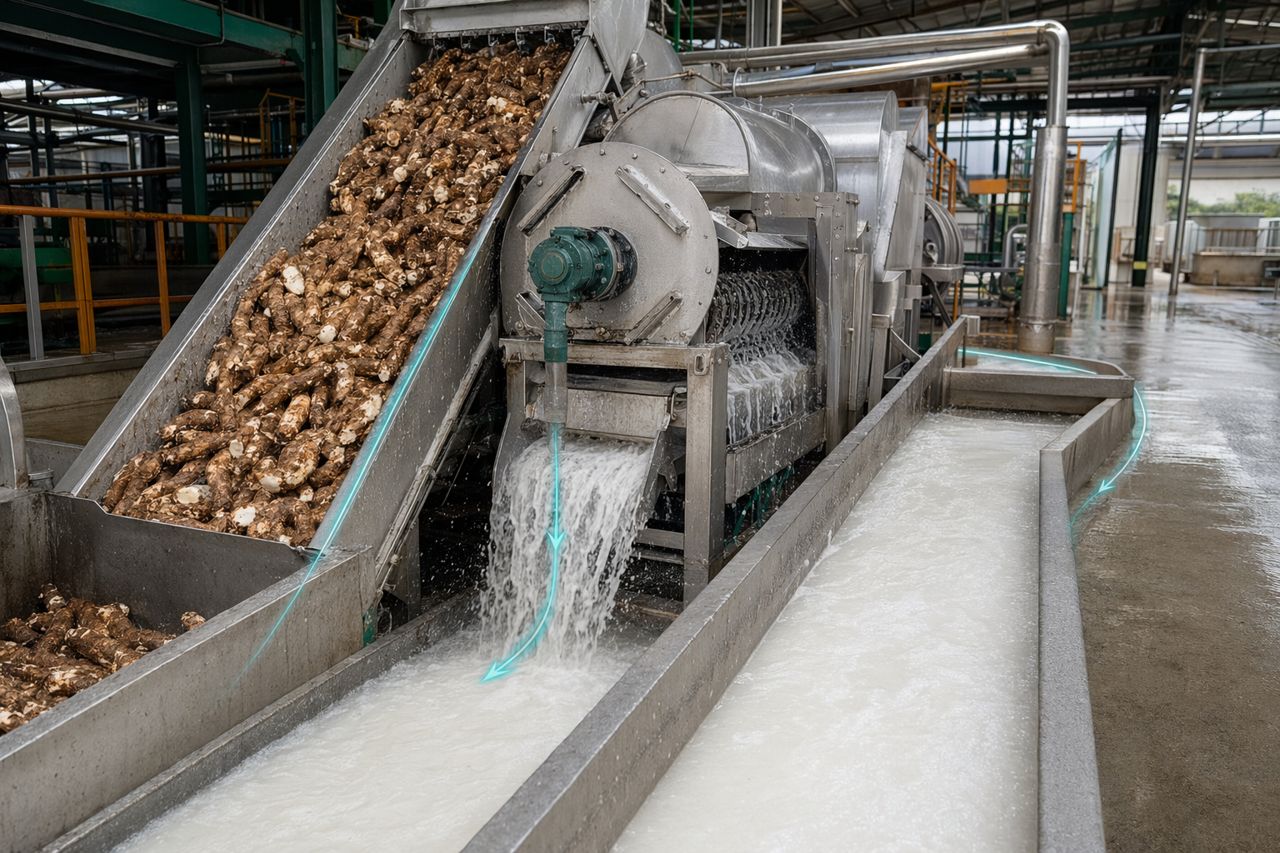
Rasping and pulp release
The rasping stage sets the ceiling for recovery. Enzyme selection can help open plant tissue, release trapped starch, and reduce starch loss carried away with coarse pulp. The goal is not to complicate production. The goal is to make more of the starch you already paid for easier to recover.
Typical buyer goals include:
- Better starch release from fibrous pulp
- Reduced bound starch in residue streams
- More stable extraction results across variable root lots
- Lower dependence on aggressive mechanical adjustment
- Improved downstream separation behavior
Slurry viscosity control
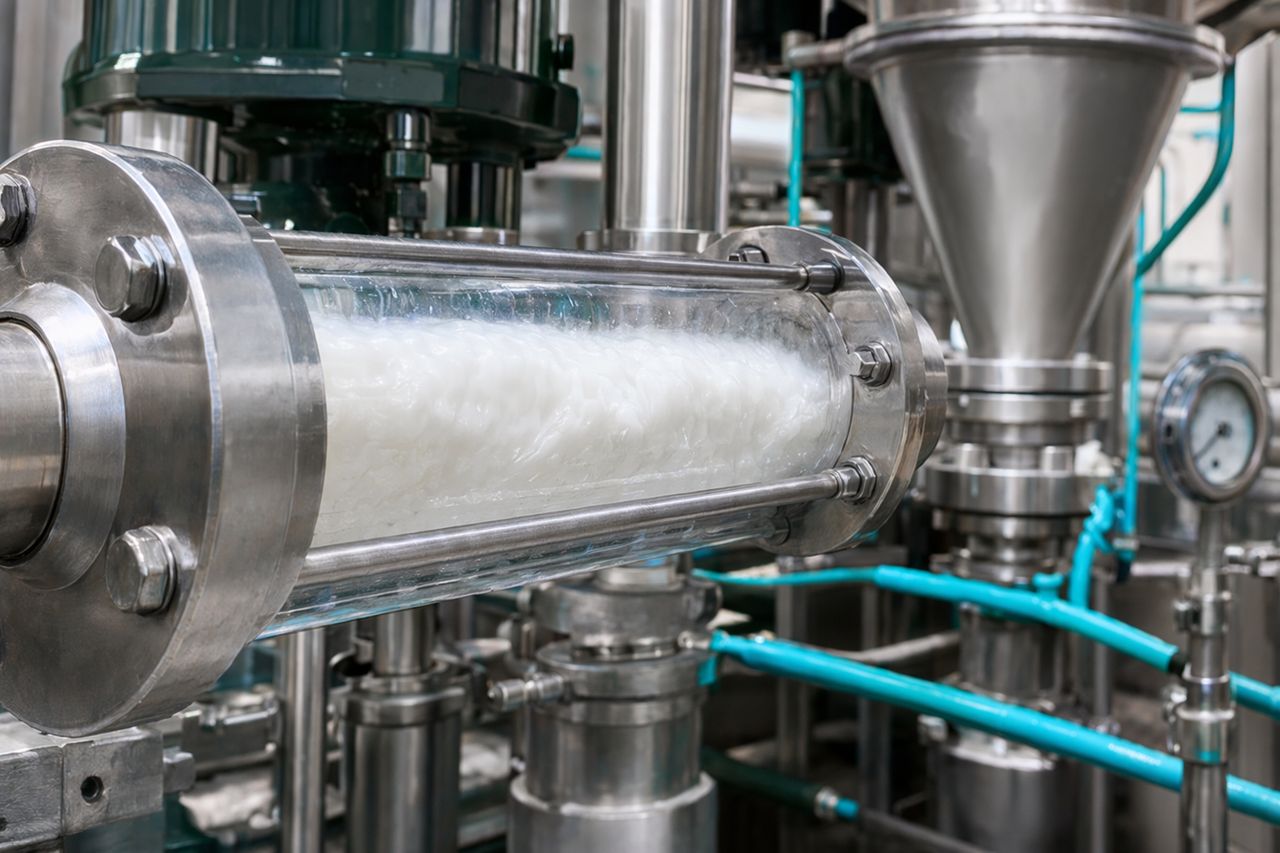
Cassava slurry behavior changes quickly with root age, harvest conditions, and processing delay. When viscosity rises, pumps work harder, screens blind faster, and hydrocyclone performance can drift.
A disciplined enzyme program can help manage slurry flow so operators see fewer surprises during peak throughput. We focus on process fit: where to dose, when to dose, what to watch, and how to avoid over-treatment.
Separation and washing support
Hydrocyclones, screens, and separators perform best when the slurry is consistent. Enzymes can support better separation by reducing structural interference from fiber and pectin-rich material, allowing starch granules to move through the process with less drag.
The practical value is straightforward:
- Cleaner separation behavior
- Reduced carryover risk
- More predictable wash efficiency
- Better control of starch brightness
- Less rework caused by unstable feed conditions
Pulp dewatering and water load
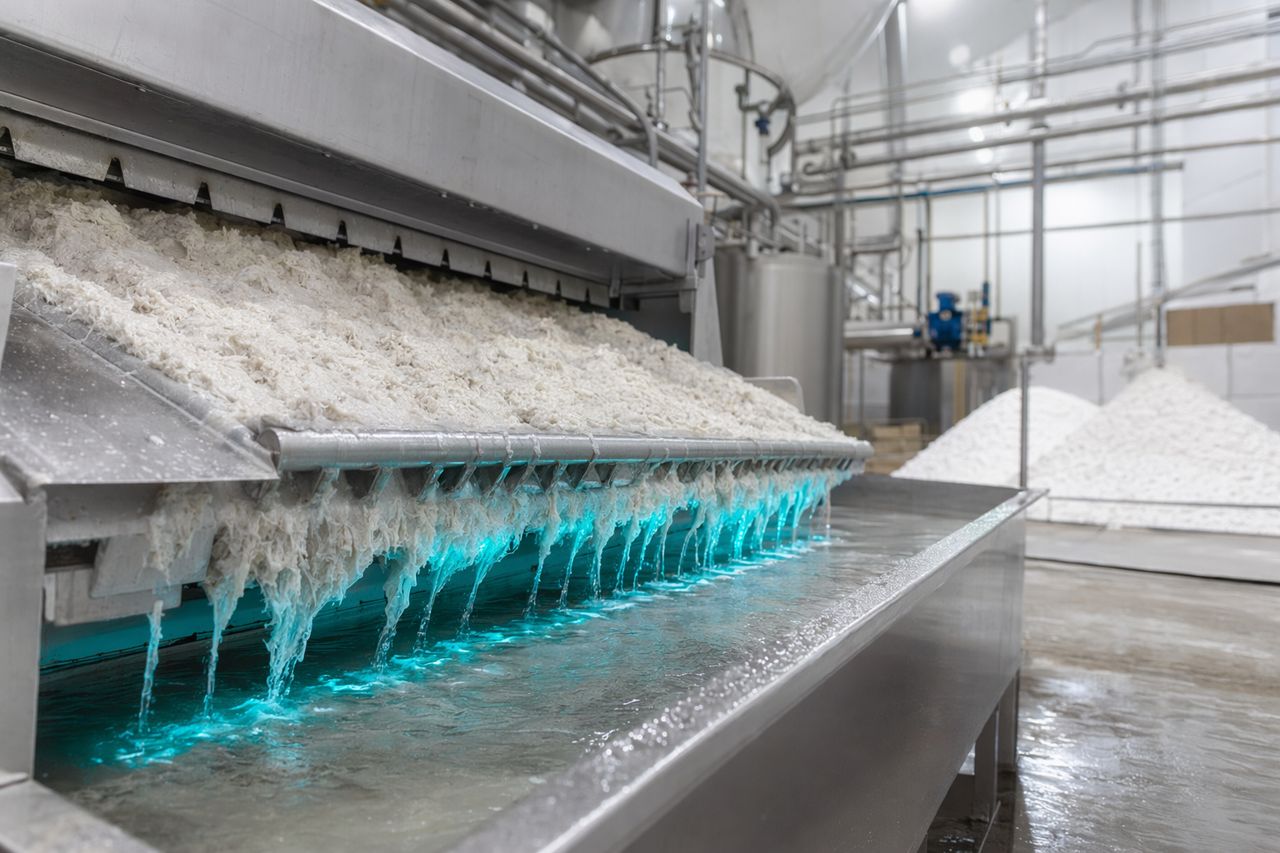
Fibrous residue that holds too much water can create handling cost, hauling cost, odor risk, and housekeeping problems. Enzyme use can support improved pulp drainage when matched properly to the line.
For many factories, this is not only a yield discussion. It is a site-efficiency discussion.
Enzyme categories we help you evaluate
Cellulase for fiber opening
Cellulase programs are used to help loosen cassava cell-wall structure and improve starch release from fibrous material. The fit depends on root condition, rasping performance, slurry residence time, and the plant’s tolerance for process change.
We help you evaluate cellulase use with practical questions:
- Is starch visibly retained in the pulp?
- Are operators increasing mechanical intensity to compensate?
- Does recovery drop during certain root lots?
- Is fiber interfering with screening or washing?
- Can the process provide enough contact time without adding complexity?
Pectinase for slurry behavior and release
Pectin-rich structures can contribute to difficult slurry behavior and inconsistent release. Pectinase can help reduce this interference when applied at the correct point in the process.
The buyer value is operational: smoother flow, improved pulp opening, less separation stress, and better consistency from shift to shift.
Amylase for controlled starch management
Amylase requires careful intent in cassava starch factories because the product itself is starch. The wrong use can reduce sellable yield or damage product targets. The right use may be relevant in specific side-stream, viscosity, cleaning, or process-control situations.
ManiFlow Catalytics helps define whether amylase belongs in your process at all, and if it does, how to limit its use to the correct objective.
Built for plant managers, production teams, and procurement
A strong enzyme supply program is not only about the product. It is about fewer unknowns.
ManiFlow Catalytics supports cassava starch factories with:
- Enzyme selection by loss point and process objective
- Dose-discipline guidance that operators can actually follow
- Start-up support for controlled plant trials
- Practical troubleshooting for viscosity, pulp loss, separation, and drainage
- Documentation for purchasing and technical review
- Supply planning that reduces stockout and substitution risk
- Clear quote paths for kilo-scale evaluation and production purchasing
We know the concerns behind a purchase order: consistency, lead time, batch reliability, technical accountability, and the risk of introducing a new variable into a running factory. Our role is to make enzyme use easier to justify and easier to manage.
How we approach a cassava starch enzyme trial
1. Identify the loss point
We start with the problem that costs money: starch remaining in pulp, unstable viscosity, separation drift, poor dewatering, brightness variation, or wastewater load.
2. Match the enzyme to the process window
A product that works in theory can fail if the plant cannot provide the right contact time, temperature range, pH condition, mixing quality, or control point. We help match the enzyme to the actual line.
3. Keep the trial measurable
Good trials need simple plant-floor indicators. We help define what to compare before and after treatment: pulp starch loss, slurry handling, screen condition, separator stability, cake moisture behavior, washing clarity, and finished starch quality.
4. Protect the product specification
Cassava starch buyers care about brightness, purity, viscosity profile, odor, and consistency. Enzyme use should support the specification—not create a new quality risk.
5. Build a repeatable operating routine
The best enzyme program is one your operators can repeat during busy production. We support simple handling, clear dosing logic, and troubleshooting steps for root variability.
Common problems we help troubleshoot
“Our pulp still carries too much starch.”
We look at rasping condition, pulp opening, enzyme contact opportunity, dilution, and screening behavior. The goal is to improve release without forcing the plant into an unrealistic process change.
“Slurry gets heavy and separation becomes unstable.”
We review root condition, residence time, pectin-related viscosity, fiber load, and where treatment could help stabilize flow before key separation equipment.
“We want better recovery, but we cannot risk product damage.”
We separate extraction-support enzymes from starch-conversion risks and define clear boundaries. Especially with amylase, control matters.
“Procurement needs a reliable technical supplier.”
We provide practical product guidance, quote clarity, and supply planning support so your purchasing team is not forced to choose based only on a low-price line item.
Why ManiFlow Catalytics
ManiFlow Catalytics is focused on industrial enzyme solutions for cassava starch factories. We speak in process outcomes: recovery, flow, separation, brightness, residue handling, and repeatability.
You will not get generic enzyme language from us. You will get questions that sound like your plant:
- Where is the starch being lost?
- How variable are your roots this week?
- Is the slurry hard to pump or hard to separate?
- Are screens blinding before the end of the run?
- Is dewatering creating a disposal problem?
- Can your operators hold the dose and contact time reliably?
- What does procurement need to approve the trial?
That is how an enzyme program becomes a production tool instead of another chemical line item.
Request a quote
Tell us what you are processing, where the loss or bottleneck appears, and which enzyme category you want to evaluate. We will respond with a practical quote path and the technical questions needed to size the recommendation.
Use the on-site form below to request pricing for cassava starch enzyme supply, trial quantities, or production planning.